Engineered to comply with local German safety standards, offering high thermal efficiency and robust automated operations.
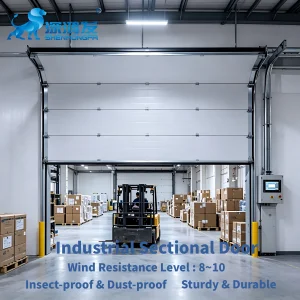
Munich Heavy-Duty Industrial Sectional Overhead Door with Remote Control and Dock Integration
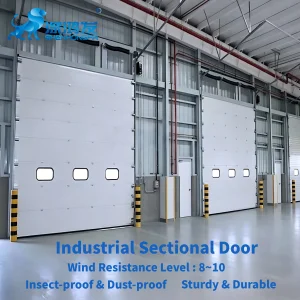
Frankfurt Smart Logistics Hub Overhead Sectional Door with Automatic Lift System
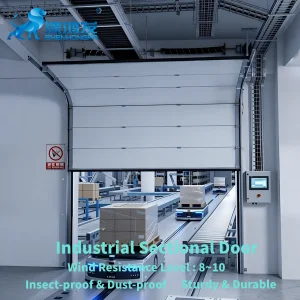
Hamburg Port Wind-Resistant Security Storm Doors & Industrial Sectional Systems
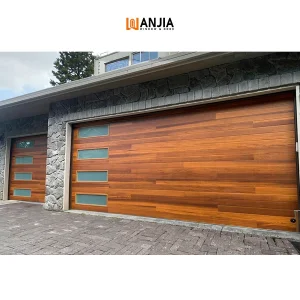
Stuttgart Premium Full-View Glass & Aluminum Sectional Door for Modern Commercial Showrooms
Understanding the strict regulatory framework, EnEV compliance, and the demand for thermal insulation in Central European logistics hubs.
In Germany, the industrial and commercial sectors are governed by some of the most comprehensive building energy standards globally. The transition to the Gebäudeenergiegesetz (GEG), or Building Energy Act, has elevated the requirements for thermal performance across all structural envelope components, specifically targeted at industrial warehouses, cold-storage distribution centers, and automotive assembly facilities. Large openings, such as dock doors and transit passages, represent the primary source of thermal bridging and energy dissipation. Consequently, selecting an overhead door manufacturer that offers precise thermal transmittance values (U-value) is paramount for local project acceptance.
Beyond thermal performance, German industrial facilities require robust structural reliability. In the high-wind zones of Northern Germany near the ports of Hamburg and Bremen, overhead door systems must resist significant wind loads (certified under DIN EN 12424). Furthermore, mechanical components must meet the stringent safety requirements outlined in DIN EN 12604, focusing on user protection, mechanical stability, and built-in safety brakes to prevent accidental door drops. The European market demands high performance under heavy operational frequencies, meaning that doors installed at busy shipping hubs are expected to exceed 100,000 duty cycles with minimal maintenance.
As a response, leading German project developers and facility designers no longer view industrial doors as simple physical barriers, but as integrated smart components within a building's energy-management framework. The transition towards automated logistics centers in key regions like North Rhine-Westphalia requires real-time telemetry from door controllers, ensuring rapid open-close cycles that minimize internal thermal deviation while optimizing automated guided vehicle (AGV) flow.
| German Standard / Directive | Technical Objective | Mandatory Compliance Parameters |
|---|---|---|
| GEG (Gebäudeenergiegesetz) / DIN EN 12428 | Thermal Transmittance & Insulation Performance | U-value below 1.4 W/(m²·K) for fully assembled doors, including joints and glazing. |
| DIN EN 12424 | Wind Load Resistance Ratings | Class 2 to Class 4 compliance, sustaining pressure loads up to 1000 Pa for coastal regions. |
| DIN EN 12604 / EN 13241-1 | Mechanical Safety & Anti-Drop Protection | Inclusion of integrated safety catch systems, spring break protection, and cable failure safety devices. |
| DIN EN 12426 & DIN EN 12427 | Air Permeability & Draft Control | Class 2 to Class 3 ratings to prevent significant pressure losses in heated/chilled warehouse zones. |
Analyzing procurement patterns, automation trends, and the strategic positioning of Chinese manufacturing centers.
The worldwide demand for industrial overhead doors has seen significant acceleration, primarily fueled by the rapid expansion of e-commerce warehouses, automated distribution hubs, and smart cold-chain operations. Global procurement managers are under constant pressure to balance premium structural quality with tight capital expenditure (CAPEX) limits. This optimization requires assessing the Total Cost of Ownership (TCO), which factors in initial material procurement, transport logistics, customs duties, installation complexities, and subsequent maintenance schedules.
Historically, European procurers relied strictly on local regional manufacturers. However, modern globalized supply networks have introduced highly competitive alternatives. Large-scale Chinese manufacturing centers have significantly upgraded their technology, utilizing advanced computer numerical control (CNC) profiling, fully automated continuous foaming lines, and robotized hardware assembly. This transformation enables manufacturers like Dongguan Gerald Doors Co., Ltd. to produce systems that align perfectly with European DIN norms while offering significant cost efficiency and production scalability.
Combining automated production, strict quality assurance, and deep custom-engineering capabilities to support European supply chains.
Dongguan Gerald Doors Co., Ltd. is a leading China garage door manufacturer specializing in residential, commercial, and industrial door solutions for customers worldwide. With a strong focus on quality, innovation, and reliability, Gerald Doors provides a comprehensive range of entrance and access systems designed to meet the needs of modern buildings, warehouses, logistics centers, factories, and residential properties.
Our competitive advantage lies in the integration of industrial automation and advanced material sourcing. Our manufacturing facility in Dongguan utilizes continuous polyurethane foaming technology, ensuring uniform density and superior thermal performance across all sandwich panel doors. By automating our metal profiling, robotic welding, and automated surface treatments, we maintain tight tolerance levels that guarantee smooth installation and long-term operating reliability on site.
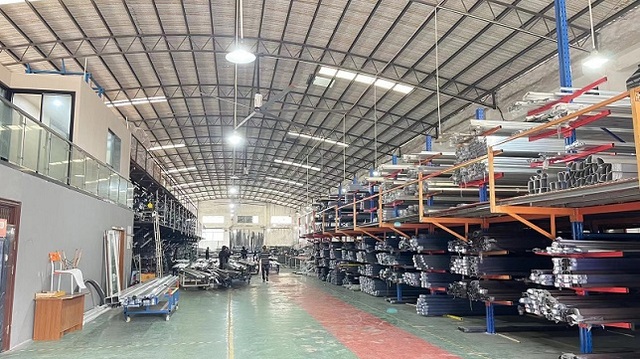
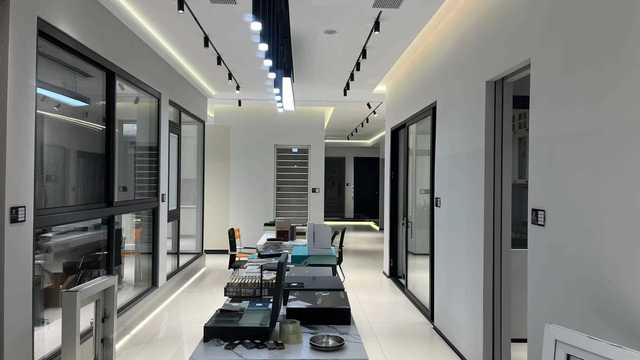
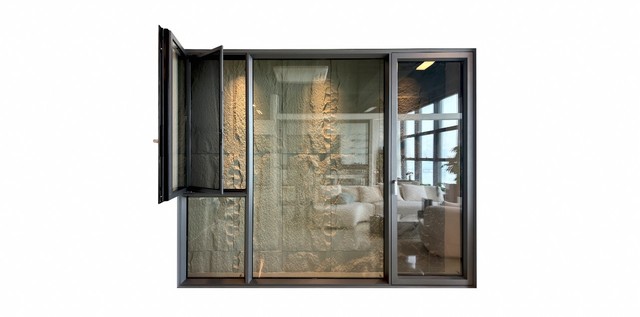
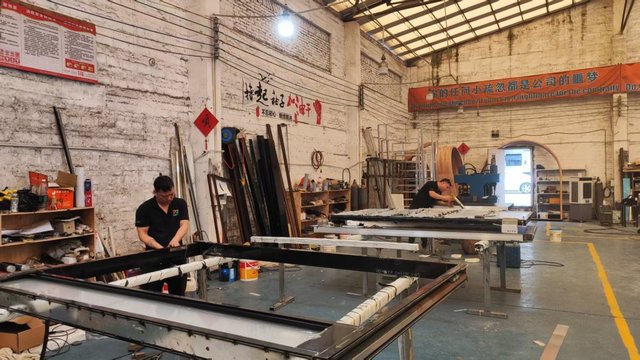
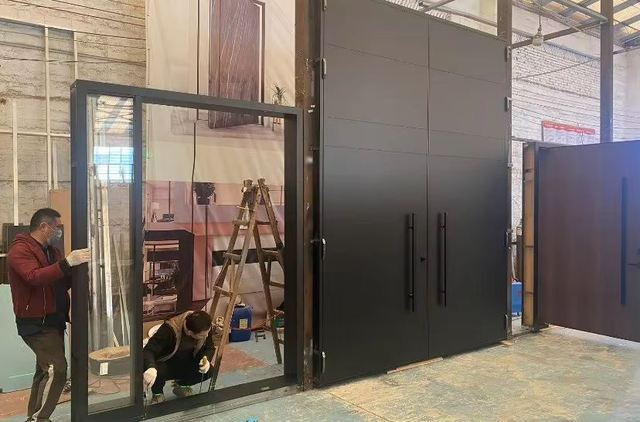
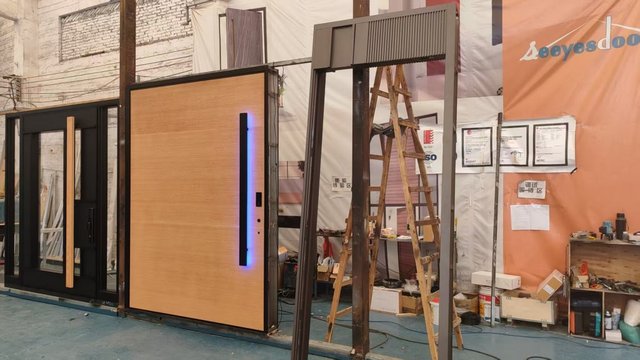
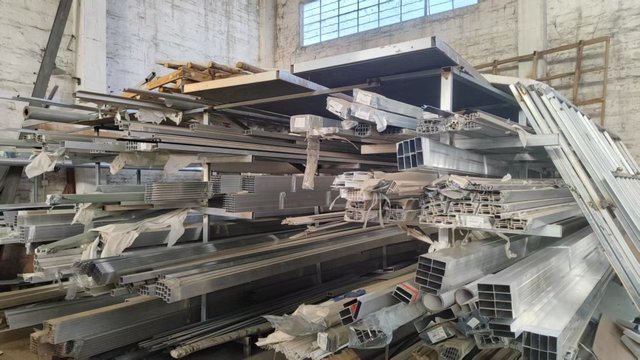
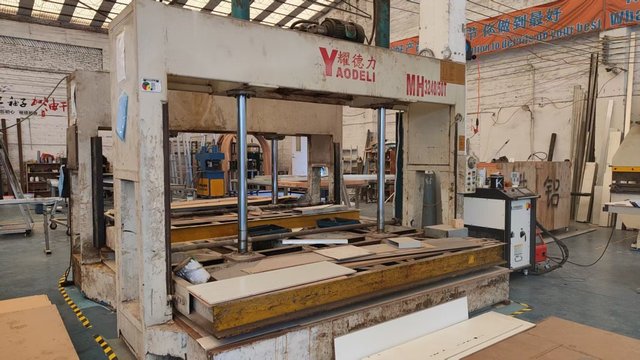
At Gerald Doors, we understand that every project has unique requirements. Our experienced engineering and production teams work closely with customers to develop tailored solutions that match specific dimensions, operational needs, architectural styles, and performance standards. From design and manufacturing to quality control and delivery, we maintain strict production processes to ensure consistent product excellence. Serving clients across North America, Europe, the Middle East, Southeast Asia, and other global markets, Gerald Doors has built a reputation for dependable products, responsive customer service, and competitive manufacturing capabilities.
Explore customized application solutions deployed across major commercial and residential projects in key German cities.
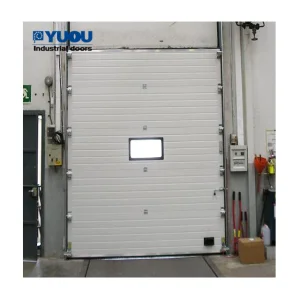
Berlin Smart Apartment Complex Automatic Lift Motorized Sectional Garage Door
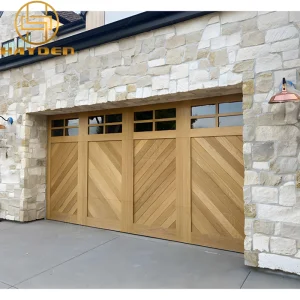
Bavarian Villa Electric Aluminum & Solid Wood Insulated Overhead Doors
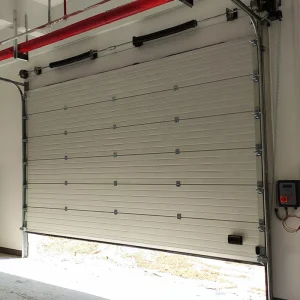
Düsseldorf Distribution Center Automated Electric Logistics Overhead Sectional Door
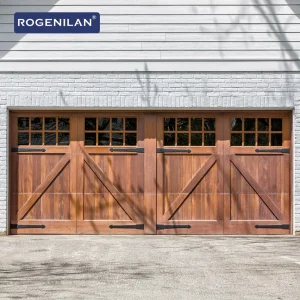
Cologne Architectural Wood-Grain Overhead Sectional Door with Plexiglass Windows
How Gerald Doors designs specific mechanical and physical properties for high-demand German operating conditions.
Designed for busy logistics hubs in regions like Leipzig and Duisburg. Equipped with high-speed motorized drives, integrated traffic lights, radar activation, and perimeter air seals to limit thermal losses during intensive loading operations.
Tailored for factories in Baden-Württemberg and Bavaria. Featuring wind-resistant steel sandwich panels (Class 3/4 DIN EN 12424) and precision safety systems to prevent structural downtime on high-cycle manufacturing lines.
Providing custom-engineered sectional garage doors for modern residential projects. Utilizing materials like natural oak, walnut-look steel finishes, and full-view aluminum frames with double-glazed glass for enhanced curb appeal and energy performance.
Technological trends changing the engineering requirements and efficiency standards of large-scale access systems.
1. Industry 4.0 Integration & Predictive Maintenance: Smart sensor arrays integrated into modern door shafts and motor units continuously monitor parameters like spring tension, cycles, operational noise, and motor temperature. Using IoT gateways, this telemetry is transmitted to centralized maintenance platforms, allowing facility operators to schedule maintenance before structural failure occurs, reducing down-time.
2. High-Performance Thermal Barriers: The demand for lower U-values is driving manufacturers to innovate beyond traditional 40mm thick panels. The trend is moving towards 50mm to 80mm composite steel sandwich panels with thermal break profiles. These breaks physically separate the exterior and interior steel skins with high-density polyamide insulation, eliminating thermal bridges and drastically reducing building energy usage.
3. Enhanced Safety Systems: As regulatory standards increase, traditional safety measures are being supplemented by advanced optical scanners, light curtains, and smart self-monitoring bottom safety edges. These systems detect obstructions in the door pathway prior to contact, ensuring safety compliance on fast-closing automatic doors.
4. Sustainable Material Sourcing: Environmental Product Declarations (EPDs) are increasingly required for building materials in Germany and Western Europe. Overhead door manufacturers must utilize raw materials with clear recycling pathways, lead-free coatings, and eco-friendly foaming agents (pentane-blown polyurethane) to assist project developers in securing DGNB or LEED sustainability certifications.
Critical checkpoints for purchasing directors importing overhead industrial systems from Chinese manufacturing hubs into the German market.
Sourcing overhead doors from China for European projects requires careful verification of standards and logistics to ensure seamless installation and regulatory compliance:
High-insulation, secure, and automated overhead sectional configurations built to meet German DIN standards.
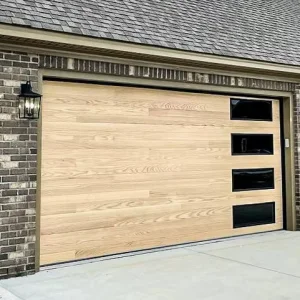
German-Standard Energy Efficient Steel Sectional Garage Door with High Thermal Insulation
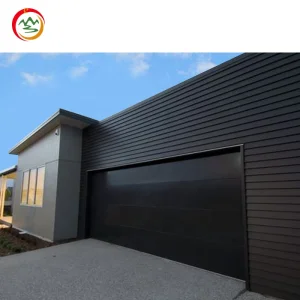
Dresden Residential Walnut-Finish Anti-Theft Automatic Sliding Overhead Garage Door
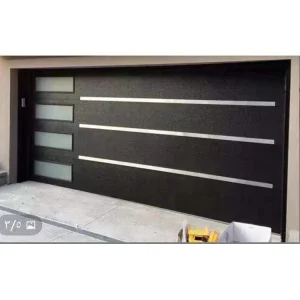
Leipzig Commercial PU-Foam Infilled Overhead Door with Integrated Pedestrian Wicket Door
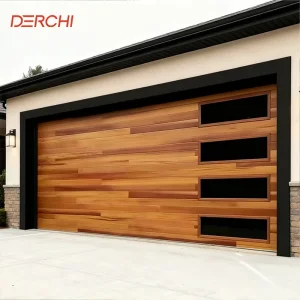
Bremen Maritime Port Heavy-Duty Galvanized Steel PU Foam Sliding Overhead Door
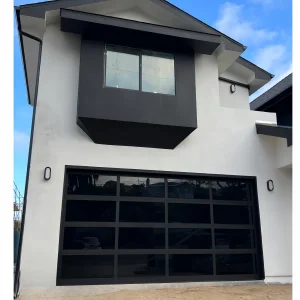
Nuremberg Automotive Studio Frameless Aluminum Glass Overhead Door
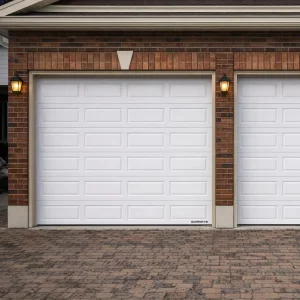
Hannover Exhibition Center Custom Size T500 Insulated Sectional Overhead Door
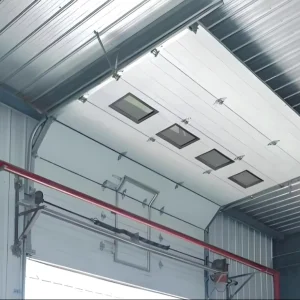
Stuttgart High-Speed Motorized Warehouse Overhead Door with Advanced Thermal Barrier
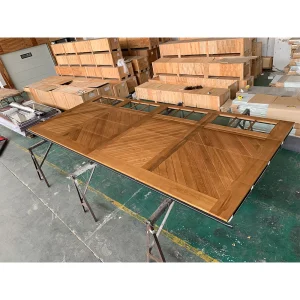
Munich Luxury Villa Smart White Oak Solid Wood Double Car Sectional Garage Door
Addressing critical technical, engineering, and logistics questions from German procurement managers and contractors.
Yes. All industrial and residential sectional doors manufactured by Dongguan Gerald Doors are engineered to meet the requirements of European Standards (EN 13241-1). We offer safety features such as integrated spring safety devices (torsion springs), cable safety devices, thermal insulation compliance, and wind pressure load certifications (DIN EN 12424).
Depending on the panel thickness and glazing configuration, our 40mm polyurethane-filled sandwich panels achieve a U-value of approximately 1.35 W/(m²·K). For premium applications requiring higher efficiency, we offer panels up to 50mm thick with optional integrated thermal breaks, which further reduce heat transmittance to align with GEG requirements.
We work with international logistics providers to offer FOB, CIF, or DDP delivery terms. Doors are securely packed in custom-sized, heavy-duty wooden crates to prevent damage during sea transport. We provide complete documentation, including commercial invoices, packing lists, CE declarations of conformity, and Certificates of Origin, to support customs clearance at German ports such as Hamburg or Bremerhaven.
Yes. Customization is one of our primary capabilities. We manufacture overhead doors to exact client dimensions. We offer various surface finishes, including stucco-embossed, micro-profiled, wood-grain, and smooth textures, in a range of RAL colors. Additionally, we integrate motor drive systems compatible with European power systems (230V single-phase or 400V three-phase, 50Hz) and support integration with third-party control systems like GfA, Marantec, or Somfy.
Our standard industrial torsion springs are designed for a minimum lifetime of 25,000 duty cycles. For heavy-use logistical sites and distribution centers, we offer customized spring setups rated for 50,000 to 100,000 cycles using high-tensile spring steel wire.
We provide comprehensive installation manuals, structured wiring diagrams, and detailed video instructions. We also coordinate with local German installation teams, providing structural engineering data and remote support during commissioning. For large-scale projects, we can provide direct consultation to coordinate with local installation specialists.
Get in touch with our engineering team for custom drawings, technical specifications, and a detailed quote tailored to your project requirements in Germany.
 Gerald Doors