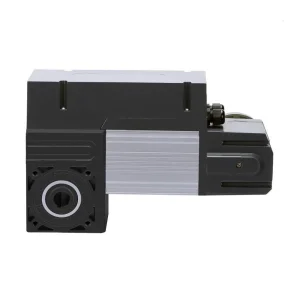
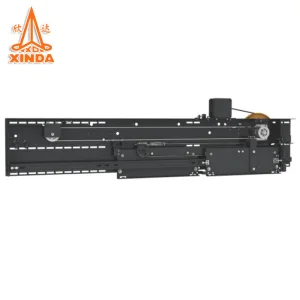
Advanced industrial automated solutions deployed to optimize efficiency, security, and climate stability in manufacturing and heavy logistics settings.
Ethiopia is fast emerging as the primary manufacturing and logistical epicenter of East Africa. Triggered by the government's Growth and Transformation Plan (GTP) and massive investments in export-oriented manufacturing zones, major centers such as the Hawassa Industrial Park, Bole Lemi Industrial Park, and Adama Industrial Park require world-class industrial access control. These facilities host textile production, food processing, pharmaceuticals, and heavy automotive assembly line plants.
For these manufacturing facilities to run at optimal efficiencies, high-performance physical barriers are required. Rapid industrialization demands door systems that prevent dust contamination, maintain cleanroom standards, secure large machinery, and offer rapid cycle operation. In particular, agro-processing and cold-chain facilities require industrial doors with high thermal insulation to prevent energy loss amid Ethiopia's variable local climate conditions.
Modern industrial entryways have transitioned from basic mechanical barriers to integrated, smart IoT devices. Incorporating radar detection, loop detectors, light curtains, and programmable logic controllers (PLC) allows automated doors to communicate seamlessly with factory management software. Current developments in industrial door engineering focus heavily on three major pillars:
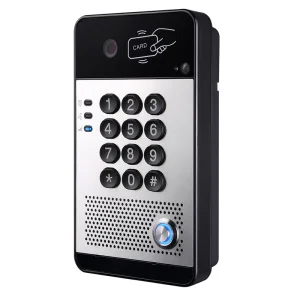
Utilizing SIP intercom systems, RFID readers, and biometrics to sync access control with warehouse ERPs. This ensures unauthorized entries are prevented across large facilities.
High-speed roll-up doors operating at speeds up to 2.0m/s dramatically reduce thermal transfer, lower energy costs, and maximize forklift throughput times in distribution facilities.
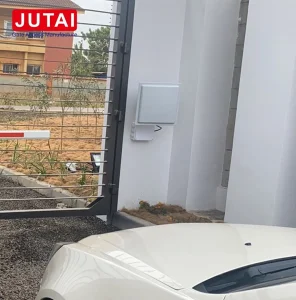
Advanced sensor arrays (like loop sensors, radar motion sensors, and safety edges) ensure the door reverses immediately if an obstacle is encountered, preserving workers' safety.
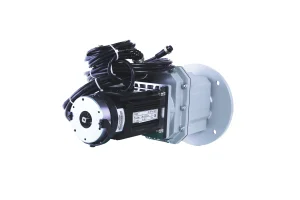
In the global supply chain landscape, procurement officers are no longer just buying off-the-shelf doors. They look for custom engineered solutions that match precise dimensional parameters and electrical grid setups. For instance, in developing regions such as Ethiopia, local electrical infrastructure suffers from voltage drops. Global procurement relies heavily on sourcing manufacturers capable of modifying control components, offering heavy-duty servo motor systems and stable voltage regulation units to withstand power spikes.
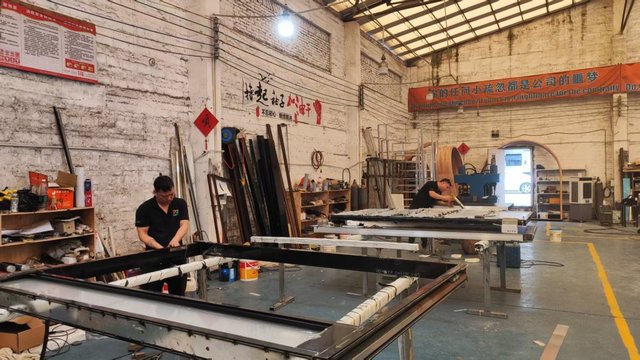
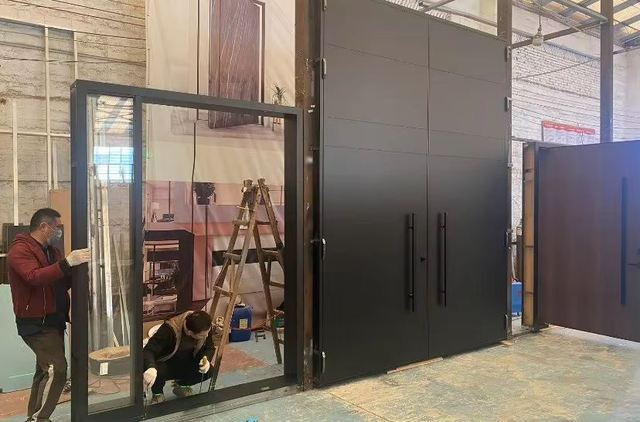
Under the banner of "Factory 4.0," Chinese door manufacturers have integrated robotic arm welding, laser cutting, automated polyurethane foam injection, and digital quality testing. This automation enables high consistency and structural integrity across every structural insulated panel, track, and component. By maintaining massive raw material reserves and integrating fully digital supply chains, leading manufacturers like Dongguan Gerald Doors Co., Ltd. can guarantee rapid fabrication timelines and highly competitive pricing structure without compromising structural safety certifications.
Dongguan Gerald Doors Co., Ltd. is a leading China garage door manufacturer specializing in residential, commercial, and industrial door solutions for customers worldwide. With a strong focus on quality, innovation, and reliability, Gerald Doors provides a comprehensive range of entrance and access systems designed to meet the needs of modern buildings, warehouses, logistics centers, factories, and residential properties.
Our product portfolio includes residential garage doors, commercial garage doors, industrial overhead doors, sectional doors, roller shutter doors, high-speed doors, fire-rated doors, security doors, and customized access solutions. Engineered with premium materials and advanced manufacturing technologies, our products are designed to deliver superior durability, safety, energy efficiency, and long-term performance in diverse operating environments.
At Gerald Doors, we understand that every project has unique requirements. Our experienced engineering and production teams work closely with customers to develop tailored solutions that match specific dimensions, operational needs, architectural styles, and performance standards. From design and manufacturing to quality control and delivery, we maintain strict production processes to ensure consistent product excellence.
Serving clients across North America, Europe, the Middle East, Southeast Asia, and other global markets, Gerald Doors has built a reputation for dependable products, responsive customer service, and competitive manufacturing capabilities. We continuously invest in research and development to improve product functionality, automation technologies, and smart access solutions that support the evolving demands of residential and industrial applications.
Driven by a commitment to quality and customer satisfaction, Dongguan Gerald Doors Co., Ltd. strives to be a trusted global partner for innovative, secure, and high-performance door systems.
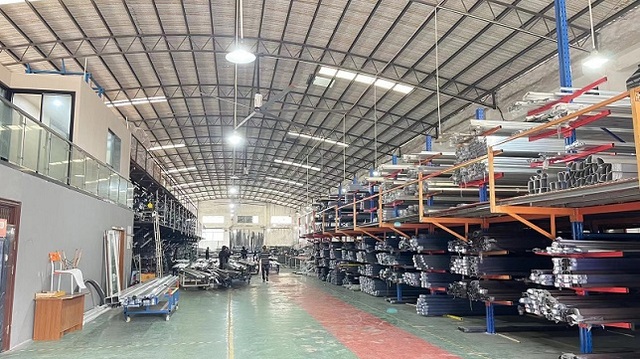
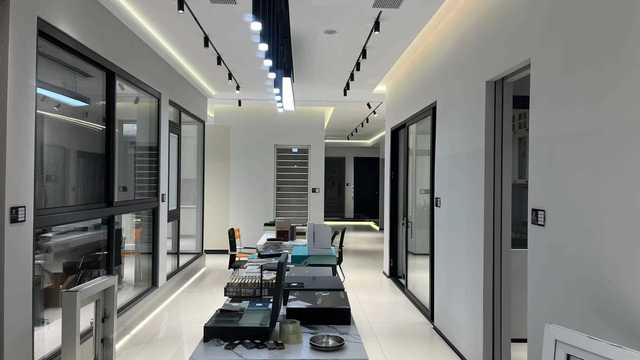
Expert technical answers regarding structural door compliance, local installation support, and system integration in Ethiopia.
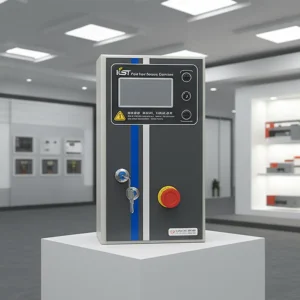
Yes. We specialize in supplying high-speed and sectional industrial doors paired with high-performance Servo control systems that operate within wide voltage margins. Additionally, we integrate automatic voltage regulators and transient voltage surge suppressors (TVSS) into the control panels to protect PLC boards and servo drives from sudden grid disruptions common in developing industrial zones.
Our industrial overhead sectional doors are engineered to comply with EN 12424 standards. We provide doors rated up to Class 3 or Class 4 wind loads (capable of resisting pressures up to 1000 Pa, roughly equivalent to 140 km/h wind speeds). These systems feature double-skinned steel panels with internal reinforcement ribs, crucial for high-altitude environments in the Ethiopian highlands.
We supply extensive step-by-step 3D mechanical installation guides, comprehensive electronic wiring schematics, and offer real-time video consultation with our senior project engineers. Every hardware component is precision pre-drilled and labeled at our Chinese Factory 4.0 plant, making on-site assembly by local engineering teams simple and error-free.
Standard fabrication takes 15 to 25 days depending on customization metrics. Sea transit from Shenzhen Port to Djibouti Port typically spans 18 to 24 days. In total, procurement managers should budget 40 to 55 days from payment confirmation to delivery at the Djibouti port, with subsequent land transport to Addis Ababa taking 3-5 days.
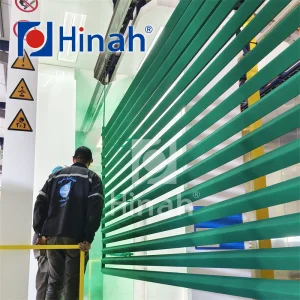
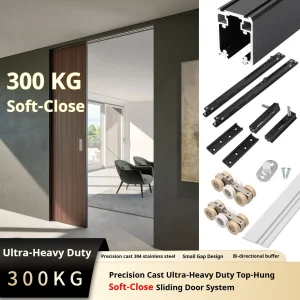
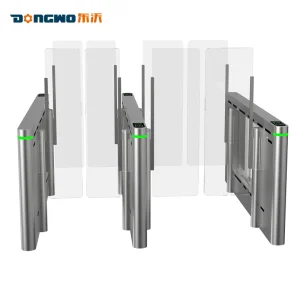
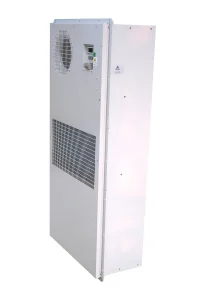
Explore our comprehensive array of door hardware, smart controllers, specialized sensors, and coating lines deployed internationally.
Contact our structural and electrical engineering specialists to configure dimensions, wind-load parameters, safety modules, and procurement logistics today.
Send Inquiry Now Gerald Doors