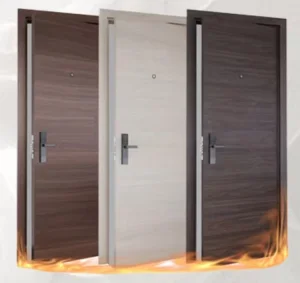
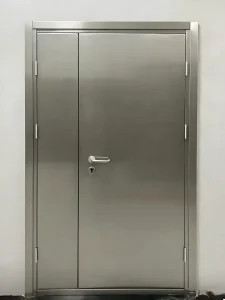
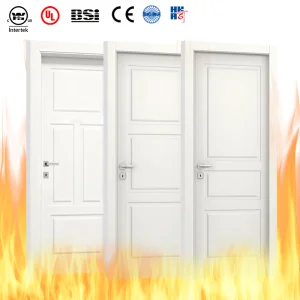
Pre-engineered structural safety solutions specialized for high-density public facilities and heavy industrial zones across Bogota, Medellin, and Cali.
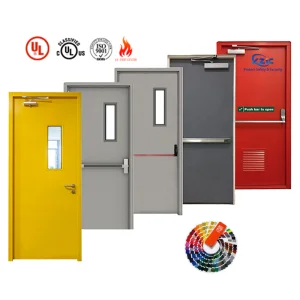

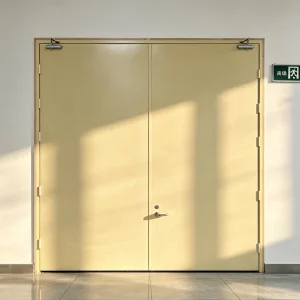
Understanding the strict regulatory framework, evolving construction demands, and regional safety compliance metrics driving the market.
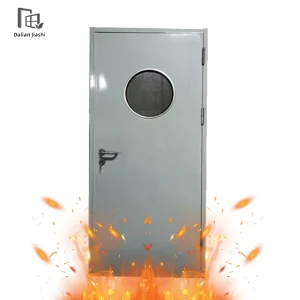
Colombia's commercial building landscape is governed strictly by the NSR-10 (Norma Sismo Resistente 2010), specifically Title J (Requisitos de Protección Contra Incendios en Edificaciones). This standard mandates that all commercial, industrial, and residential high-rise buildings utilize tested and certified opening protectives (puertas cortafuego) to guarantee containment zones during a thermal event.
In addition to NSR-10, local fire departments (Bomberos) and structural engineering consultants heavily reference US standards, specifically NFPA 80 (Standard for Fire Doors and Other Opening Protectives) and NFPA 101 (Life Safety Code). This dual-compliance requirement means that contractors and developers must source products certified by accredited laboratory programs (such as UL, FM, or Intertek WH) to pass rigorous building handover audits in Major Metropolitan Areas like Bogotá, Medellín, Cali, and Barranquilla.
Our engineering division designs doors that satisfy these strict protocols, assuring trouble-free inspections, reduced insurance premiums, and optimal life safety security.
Every fire door exported to Colombia is engineered to fulfill the exact Fire Resistance Rating (FRR) required by NSR-10, ranging from 60 to 180 minutes depending on compartmentation criteria.
Our doors seamlessly merge European (EN 1634-1) integrity levels with American UL 10C positive pressure standards, ensuring universal approval by local Colombian inspectors.
In-depth technical breakdown of materials, fire barrier physics, and advanced safety hardware systems.
Our steel fire doors utilize high-tensile hot-dip galvanized steel sheets (typically DX51D+Z grade) with a zinc coating weight of up to 120 g/m². The door leaf thickness ranges from 1.0mm to 1.5mm, while the structural frames are cold-formed at 1.5mm to 2.0mm. This ensures structural resistance against thermal warping and mechanical breaching during extreme structural fires reaching over 1000°C.
The core thermal barrier defines a fire door's performance. We employ rock mineral wool insulation with a minimum density of 120 kg/m³ to 150 kg/m³, providing superior thermal decoupling. For extreme structural 3-hour fire ratings, we implement solid inorganic perlite composite boards, achieving exceptional structural stability and thermal shielding (restricting unexposed face temperatures according to UL 10C limits).
Smoke inhalation causes more casualties than heat. Our doors feature high-performance, graphite-based intumescent strip seals installed inside the frame grooves. Under fire conditions (~150°C), these seals swell to 25 times their original volume, forming a continuous carbonaceous foam seal that isolates toxic combustion gases, hot air currents, and smoke particulates.
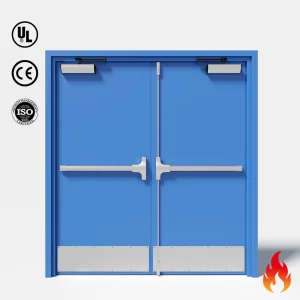
A fire door is only as reliable as its hardware components. Our product line is integrated with UL listed panic exit devices (barras antipánico), hydraulic automatic overhead door closers, and heavy-duty stainless steel ball-bearing hinges. These components undergo rigorous cyclic tests (exceeding 500,000 operations) to guarantee automatic closure and latching during emergency egress events.
How Dongguan Gerald Doors Co., Ltd. leverages smart manufacturing and supply chain efficiency to optimize large-scale projects in Colombia.
Dongguan Gerald Doors Co., Ltd. is a leading China garage door and commercial steel door manufacturer specializing in residential, commercial, and industrial door solutions for customers worldwide. With a strong focus on quality, innovation, and reliability, Gerald Doors provides a comprehensive range of entrance and access systems designed to meet the needs of modern buildings, warehouses, logistics centers, factories, and residential properties.
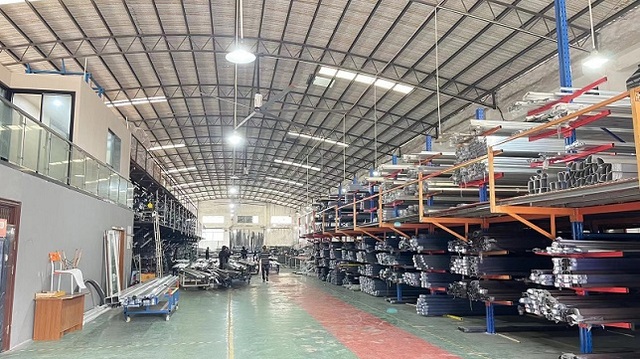
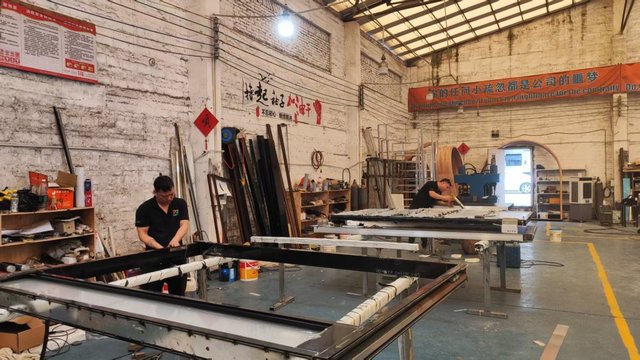
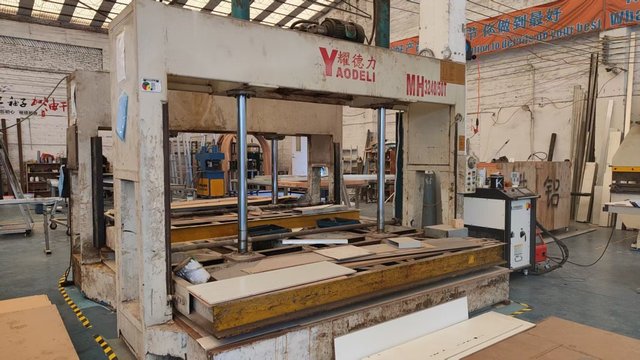
Our state-of-the-art production facilities utilize advanced manufacturing technologies, automatic punch lines, CNC bending, and robotic laser welding. By standardizing component manufacturing, we maintain absolute dimensional tolerance, eliminating local installation errors at destination sites. Our high-efficiency production allows us to manufacture complex fire doors at scale with shorter lead times, offering a vital competitive edge for developers managing tight construction schedules in Bogota and Medellin.
From design and manufacturing to quality control and delivery, we maintain strict production processes to ensure consistent product excellence. Serving clients across North America, Europe, the Middle East, Southeast Asia, and South American markets, Gerald Doors has built a reputation for dependable products, responsive customer service, and competitive manufacturing capabilities.
For the Colombia market, we optimize the logistics pipeline by offering export preparation packages, specialized anti-oxidation treatments for maritime transit, and container consolidation services. Our proximity to major deep-water ports in Southern China (Shenzhen/Guangzhou) ensures direct maritime lines to Colombian port facilities in Cartagena, Buenaventura, and Barranquilla.
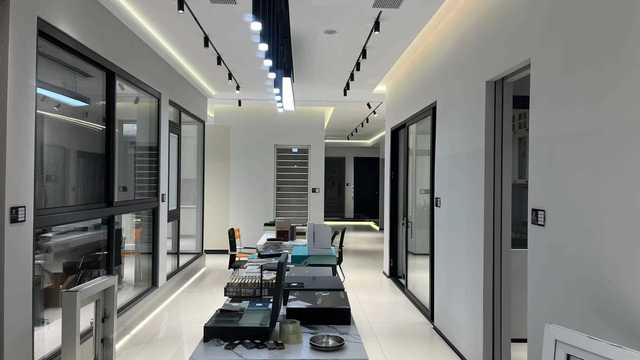
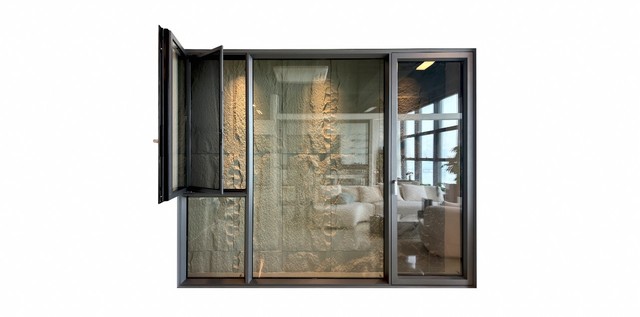
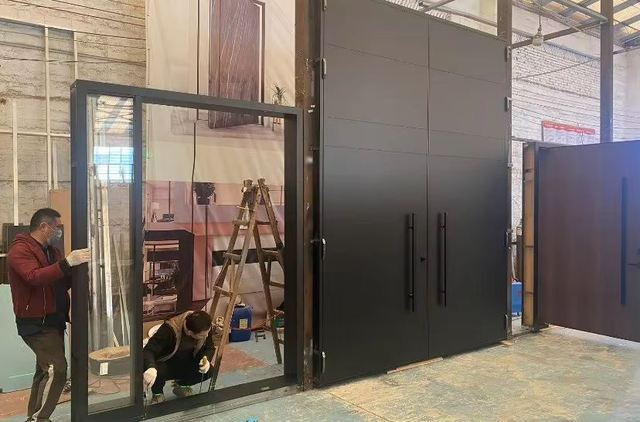
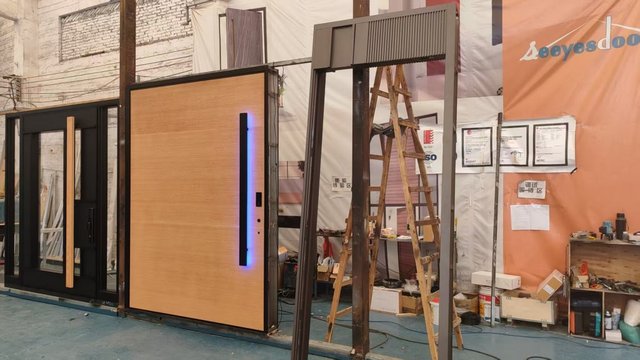
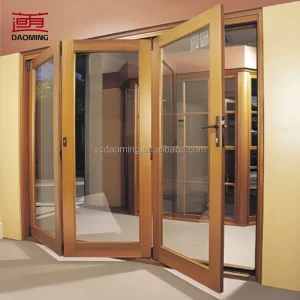
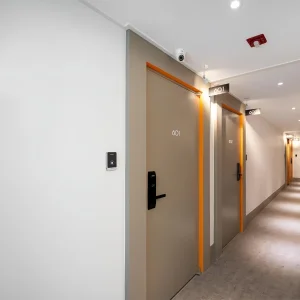
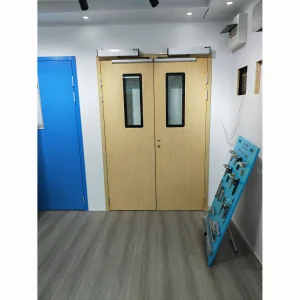
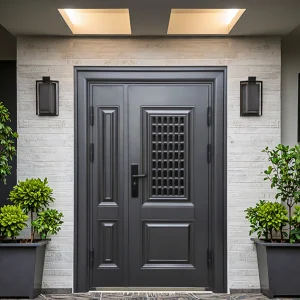
Premium wooden and luxury entry doors integrated with fire-safety structures designed for modern commercial complexes, hotels, and luxury apartments.
Addressing the pain points of Latin American construction procurement: Logistics, Customs Clearance, and On-site Integration.
Importing custom building materials into Colombia requires rigorous adherence to DIAN customs regulations. We supply comprehensive documentation sets: Certificate of Origin (often lowering tariff thresholds), Bills of Lading, Certified Invoices, and UL/CE conformity declarations in both English and Spanish. This detail reduces port delay risks in Cartagena and Buenaventura.
Long sea transits expose metal products to moisture and physical movement. We secure our products with high-tensile PE films, foam corner protectors, desiccants, and solid fumigated wooden crates. This ensures your order arrives in flawless condition, ready for quick assembly and integration.
We provide full CAD drafting, BIM models, and structural elevations prior to production. Architects and engineers can easily integrate these files into overall blueprints to verify compatibility with structural wall profiles and hardware clearances, minimizing costly design errors.
Although our main facility is in China, we offer comprehensive localized guides, high-resolution installation video tutorials, and direct remote engineering assistance. Our guides cover frame setting, hardware configuration, and intumescent strip installation to help local contractors execute the installation correctly.
Expert insights on importing, testing standards, and compliance criteria for Fire Rated Doors in the Colombia Construction Market.
The primary national code regulating building fire safety is the NSR-10 (Norma Sismo Resistente de Colombia 2010), Title J. It classifies buildings based on occupancy levels and designates the required Fire Resistance Rating (FRR) for vertical shafts, exits, and rooms. Additionally, local construction inspectors and municipal fire departments heavily accept American standards like NFPA 80 and UL 10C, which our doors are certified under.
Products are shipped via ocean container freight from Southern China ports (Shenzhen/Guangzhou). Standard sea transit time to the Atlantic ports (Cartagena/Barranquilla) is approximately 30 to 35 days, while shipments to the Pacific port (Buenaventura) average 25 to 30 days. Manufacturing lead times depend on design complexity and size, typically ranging from 20 to 30 days.
Yes. We provide authentic testing documentation and certification plates (bearing UL, CE, or standard conformity markings) with every fire door order. These certifications are recognized by major Colombian insurance providers (Sura, Seguros Bolívar, etc.) and municipal inspectors, simplifying project handovers.
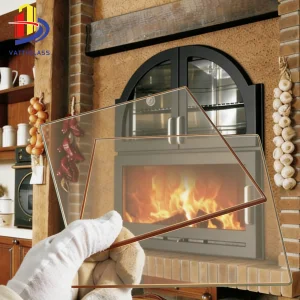
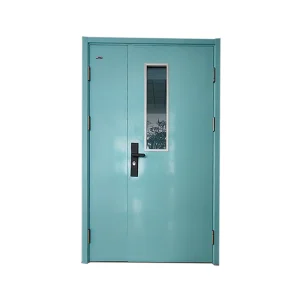
Our flexible manufacturing lines specialize in customization. We offer customized widths and heights, single/double leaf configurations, custom frame profiles (single/double rabbet), and integrated vision panels using fire-rated ceramic glass. Our engineers verify design parameters prior to manufacturing to ensure they maintain compliance with the required fire rating.
Our fire doors are insulated with a high-density, non-combustible mineral rock wool core (density > 120 kg/m³) or solid inorganic perlite composite board. These materials have low thermal conductivity, preventing heat from transferring from the fire side to the safe side of the door. This core performance keeps the unexposed face temperature well below safety limits, permitting occupants to touch and operate the door during exit.
Complete project catalog of safety doors certified to meet modern building requirements.
 Gerald Doors