Premium grade industrial entryways designed to meet the strict regulatory frameworks and operational demands of the Dutch logistical and cold chain industries.
Analyzing key structural trends, energy-efficiency challenges, and access automation requirements in Dutch logistics hubs.
The Netherlands occupies a highly strategic position in the global logistics network, functioning as the premier import and distribution gateway to the European continent. Centered on the Port of Rotterdam—Europe’s largest maritime port—and backed by Amsterdam Airport Schiphol, the Dutch commercial infrastructure demand is exceptionally rigorous. Highly specialized logistics parks, cold chain storage facilities, and advanced distribution centers span regions such as Venlo, Brabant, and South Holland. For these complexes, door systems are not merely architectural features; they are critical mechanical assets directly impacting energy retention, security, throughput speed, and regulatory compliance.
Operating in the Dutch market requires adherence to strict European standards, specifically EN 13241-1, which regulates safety and performance parameters for commercial, industrial, and garage doors. Additionally, due to the humid maritime climate and coastal exposure of the Netherlands, structural components must demonstrate superior resistance to wind loads (under EN 12424) and corrosion. Commercial garage doors installed in close proximity to North Sea ports must sustain persistent salt spray and high atmospheric moisture without mechanical failure or aesthetic degradation.
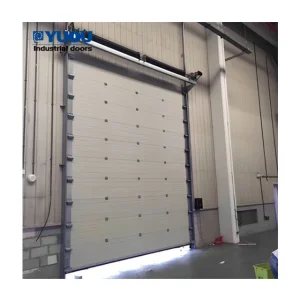
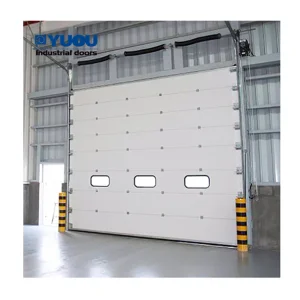
In the Netherlands, carbon reduction targets and high electricity costs drive the adoption of green building standards. When developing new logistics parks, developers target high BREEAM-NL ratings. Commercial sectional doors with premium polyurethane insulation (thicknesses ranging from 40mm to 80mm) and thermal breaks are crucial. They minimize thermal bridging and keep the building's overall heat transfer coefficient (U-value) low, resulting in direct operational savings and compliance with European green mandates.
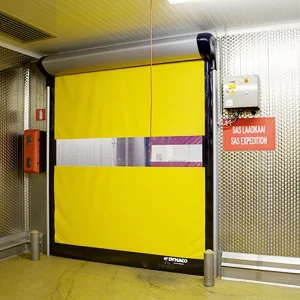
Furthermore, the Dutch food and agricultural export sector (one of the largest in the world) relies heavily on cold chain integrity. Rapid temperature shifts in warehouses can lead to product spoilage. Fast-acting high-speed PVC doors integrated with insulated sectional overhead doors ensure a dual-barrier system, reducing the air exchange time at the loading bays to seconds. This spatial design demands precise synchronization between safety radar arrays, induction loops, and motor control units.
How Dongguan Gerald Doors Co., Ltd. marries high-volume manufacturing efficiency with specialized customization for European commercial environments.
On a global scale, the industrial and commercial door market is shifting towards automation, IoT connectivity, and sustainability. Historically, European local manufacturers dominated the regional landscape. However, rising labor costs and structural energy constraints within Europe have caused a paradigm shift in sourcing strategies. Modern procurement officers in the Netherlands are actively looking for reliable overseas manufacturing partnerships capable of providing substantial cost advantages without compromising on material thickness, safety certifications, or mechanical longevity.
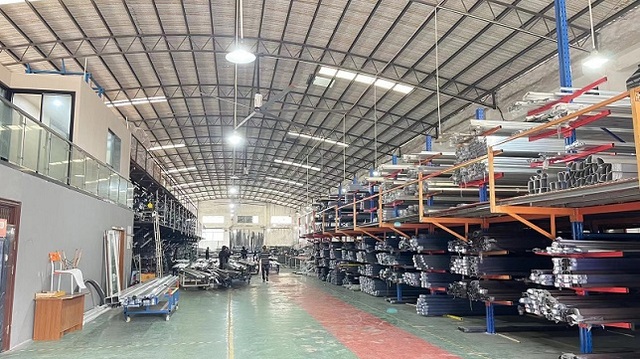
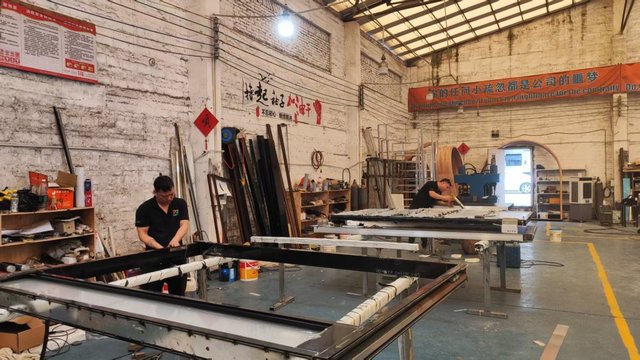
This is where Dongguan Gerald Doors Co., Ltd. offers a key competitive advantage. Operating out of Dongguan, China's advanced industrial core, our facility integrates raw-material sourcing, precision automated roll forming, robotic welding, and automated polyurethane injection lines. This concentrated production ecosystem reduces lead times and structural costs while maintaining strict dimensional tolerances. Our manufacturing process ensures that each panel, hinge, track, and spring assembly conforms strictly to the technical drawings agreed upon during the pre-engineering phase.
Our continuous double-belt production line generates polyurethane sandwich panels with uniform density, avoiding internal air voids that compromise thermal barrier integrity.
Every product batch is audited against European wind load, fire-safety (EN 13501-1), and mechanical lifecycle standards before export packaging is finalized.
We provide tailormade engineering solutions, adjusting lift types (Standard, High Lift, Vertical Lift) to integrate smoothly with specific warehouse structural configurations.
By leveraging advanced logistics channels, we ship custom-dimensioned door systems in containerized loads directly to the Port of Rotterdam. These systems are prepared for rapid installation by local Dutch field engineers. This approach dramatically reduces procurement friction and lowers total project costs by up to 30% compared to sourcing from regional European manufacturers.
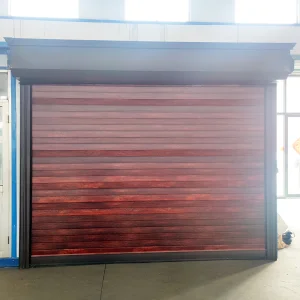
Designed and manufactured to withstand the most demanding industrial cycles and environmental dynamics.
Engineered to handle high-frequency opening cycles, extreme weather, and strict safety guidelines.
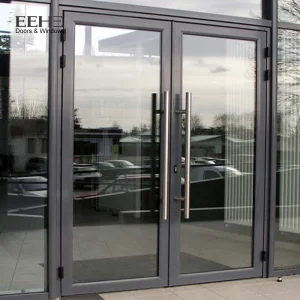
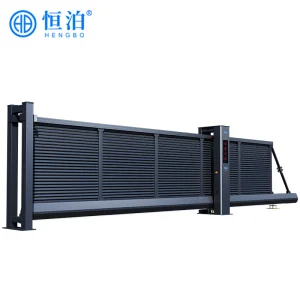
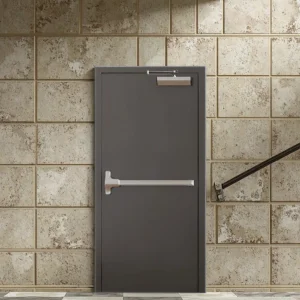
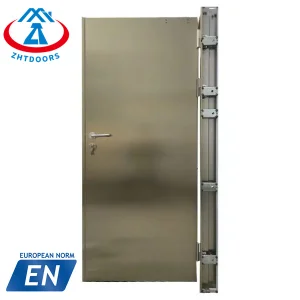
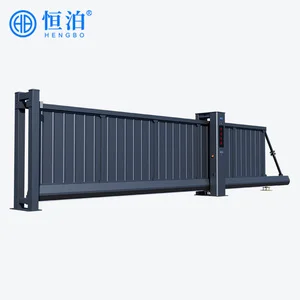
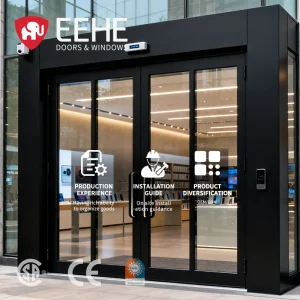
Integrating emergency exit designs, certified fire-protection components, and heavy-duty sliding gates into unified perimeter defense arrays.
Specific spatial designs tailored to local wind profiles, operational frequencies, and security needs.
When selecting industrial access systems for the Netherlands, engineers and procurement managers must balance several local factors. The physical environment and operational conditions vary widely across regions, demanding targeted engineering solutions.
Primary Concern: Severe Wind Loads & Corrosive Saline Environments.
Facilities situated on the flat, exposed coastal terrain of the Maasvlakte encounter high wind velocities off the North Sea. Standard sectional doors will bow under these loads, causing track dislocation or panel damage. Our engineering team installs heavy-duty wind ribs (integrated steel stiffeners) inside each sandwich panel and specifies Class 3 or Class 4 wind-load ratings. Furthermore, hardware accessories like hinges, rollers, and tracks are hot-dip galvanized or fabricated from Marine-Grade Stainless Steel to resist salt spray corrosion.
In the Amsterdam metropolitan area and regions such as Schiphol-Rijk, fast-acting logistical turnaround is the key metric. Freight forwarders require overhead sectional doors with integrated high-speed PVC roll-up screens. The sectional door stays open during busy loading hours, while the fast-acting PVC door opens and closes rapidly to keep wind out and control indoor climate conditions. The PVC doors use flexible bottom edges to prevent damage to cargo and forklifts during high-traffic loading windows.
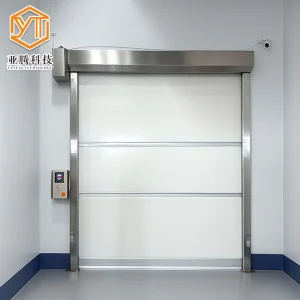
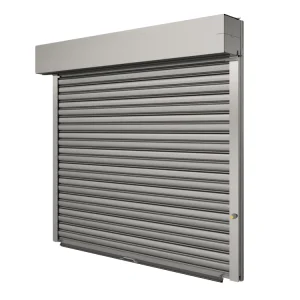
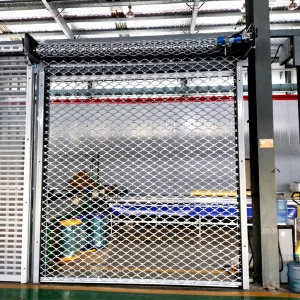
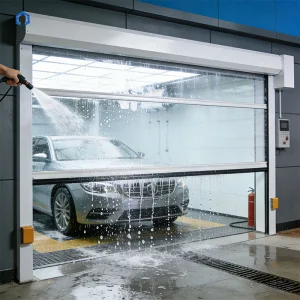
For high-tech zones near Eindhoven (often referred to as the Brainport region), environmental containment in precision electronics or cleanroom supply chain manufacturing is critical. Doors installed in these facilities must minimize particulate ingress. Here, fast-rolling shutter doors with airtight sealing profiles, non-shedding PVC materials, and integrated contact-free proximity sensors (radar or photocells) are specified to meet ISO cleanliness classes.
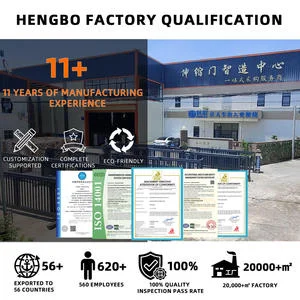
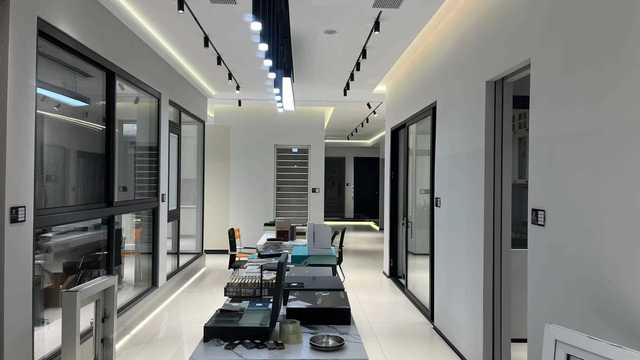
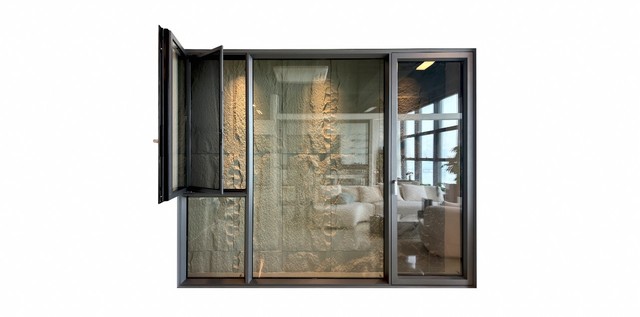
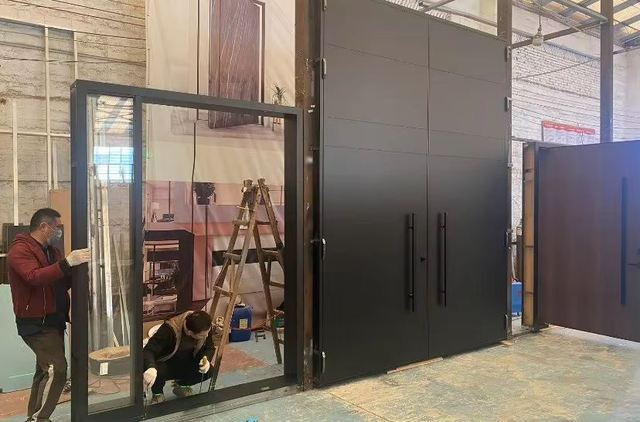
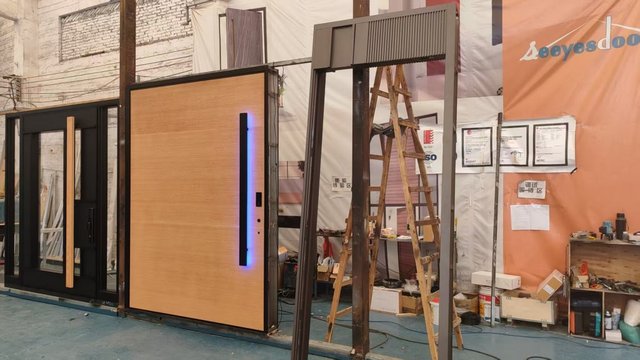
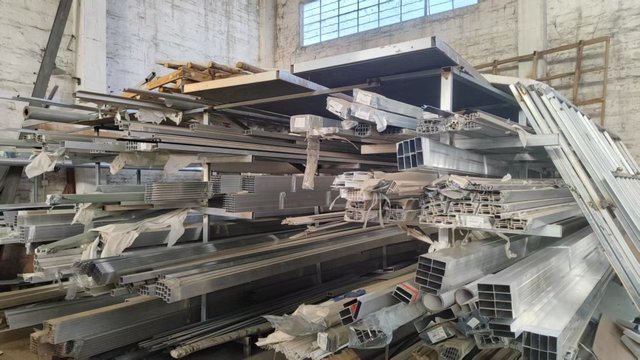
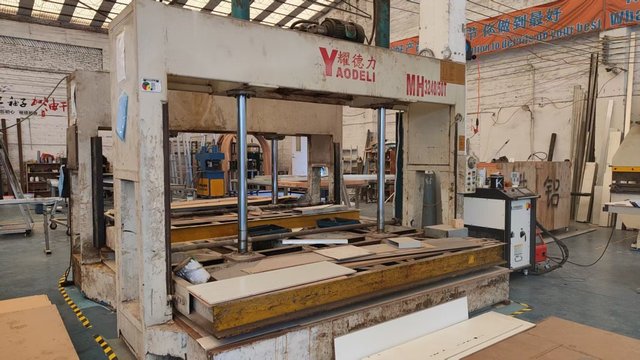
Take a look inside Dongguan Gerald Doors Co., Ltd.’s advanced manufacturing facilities, showcasing our automated raw-material processing, assembly lines, and pre-shipment inspections.
Answering your questions regarding standards compliance, logistical processes, customs clearance, and local installation support.
Yes. All commercial, industrial, and garage doors manufactured by Dongguan Gerald Doors Co., Ltd. for the European market comply with EN 13241-1. This standard dictates structural safety, wind load resistance, manual operation force, and optical safety edge requirements. Declarations of Performance (DoP) and CE certificates are included with each export shipment.
We use double-sided hot-dip galvanized steel sheet with an additional organic polyester coating (polyurethane or PVDF paint). All hinges, rollers, and structural framing components are hot-dip galvanized, with option upgrades to grade 304 or 316 stainless steel hardware, ensuring long-term rust prevention in saline maritime air.
The standard production cycle is 15 to 25 days depending on order size and custom engineering demands. Ocean transit from Shenzhen Port to the Port of Rotterdam generally takes 30 to 35 days. We provide complete sea freight arrangements (FOB, CIF, or DDP terms) with specialized export packing inside steel-framed wooden crates.
Our door systems are designed for straightforward mechanical assembly. Each order is delivered with comprehensive English CAD drawings, electrical wiring schematics, and video installation guides. Many of our Dutch clients work with local, independent gate contractors and overhead door service providers to complete the structural integration and conduct mandatory annual safety tests.
Our standard 40mm polyurethane-filled sandwich panels have a U-value of approximately 0.51 W/m²K, which helps meet BREEAM energy-efficiency requirements. For cold-storage applications or northern regions, we also offer custom panels with thicknesses of 50mm, 75mm, or 80mm to achieve even higher thermal performance.
Get in touch with our engineering support team today. We provide free technical drawings, custom price estimations, and compliance consultations for your upcoming commercial construction or renovation projects in the Netherlands.
Send Inquiry Now Gerald Doors