Explore our top-tier CE compliant solutions optimized for temperature-controlled facilities, commercial logistics, and high-frequency environments.
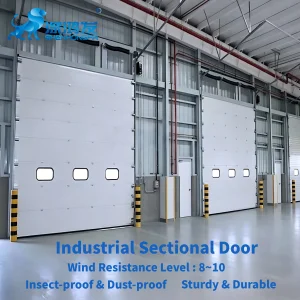
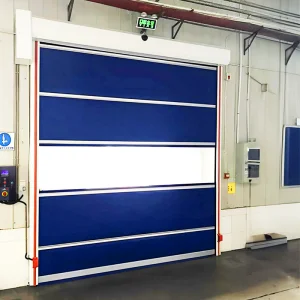
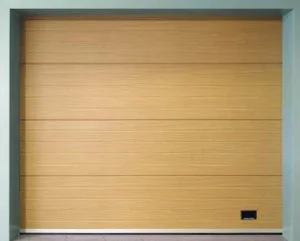
The industrial landscape is undergoing rapid modernization driven by automation, sustainability, and strict energy codes. Within commercial facilities and warehouses, the entrance system is no longer viewed as a simple passive barrier; instead, it is treated as a critical, active node in the supply chain and thermal envelope of the building.
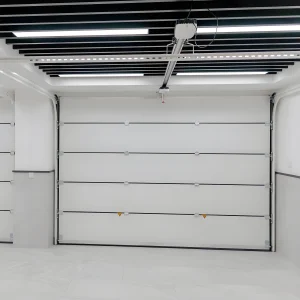
Decarbonization & Thermal Break Technology: Real estate developers and corporate stakeholders face demanding Net-Zero objectives. Consequently, sectional doors are expected to maintain low thermal transmittance (U-values) and outstanding airtightness ratings. Innovations like structural thermal breaks within panel hinges and advanced polyurethane (PU) foaming technologies are essential to prevent thermal bridging in high-efficiency facilities.
Predictive Diagnostics & IoT Integration: The integration of digital control boxes, laser scanners, and cloud connectivity has transformed high-speed and sectional doors into smart assets. Modern industrial complexes now rely on cycle-count tracking, mechanical stress telemetry, and predictive maintenance protocols to prevent operational downtime before component fatigue occurs.
Combining standard sectional structures with integrated fast roll-up tracks allows facilities to alternate configurations depending on immediate thermal and logistic needs.
Meeting the EN 12604/EN 12453 safety mandates requires implementing dual-spring break safety devices, anti-drop brackets, safety edge photo sensors, and smart light curtains.
Our products are engineered to optimize workflow and structural integrity across harsh environments.
U-Value (W/m²·K)
Wind Resistance (EN 12424)
Torsion Spring Cycle Life
BS476 Fire Rating
A detailed breakdown of key physical properties and mechanical thresholds for advanced access planning.
| Performance Parametric | Standard Market Grade | Gerald Doors Premium Specs | Operational Advancements |
|---|---|---|---|
| Panel Core Core Density | 35 - 38 kg/m³ Polyurethane | 42 - 45 kg/m³ CFC-Free PU | Significantly improves structural rigidity, skin adhesion, and resistance to denting. |
| Wind Load Capacity | Class 2 (up to 700 Pa) | Class 4 (up to 1200+ Pa) | Essential for deep coastal ports, regional logistics zones, and super-wide factory apertures. |
| U-Value / Thermal Insulation | 0.80 - 1.20 W/m²·K | 0.38 - 0.50 W/m²·K | Improves cold chain HVAC efficiency and lowers structural carbon footprints. |
| Thermal Break Design | Continuous steel skin wrap | Built-in EPDM Non-Bridging Break | Prevents condensation and icing on interior skins in cold-storage environments. |
| Hardware Composition | 1.5mm galvanized steel plate | 2.0mm - 3.0mm HDG/SUS304 | Prevents high-humidity oxidation, extending component lifespan in heavy-use zones. |
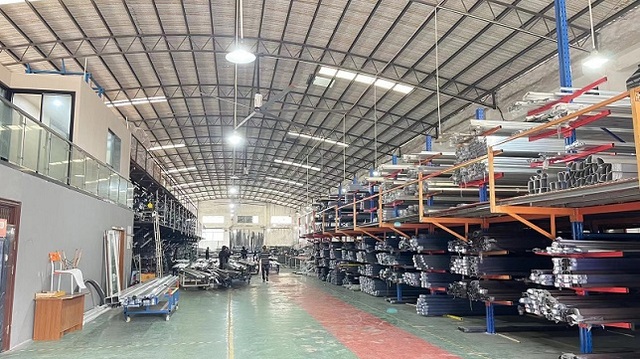
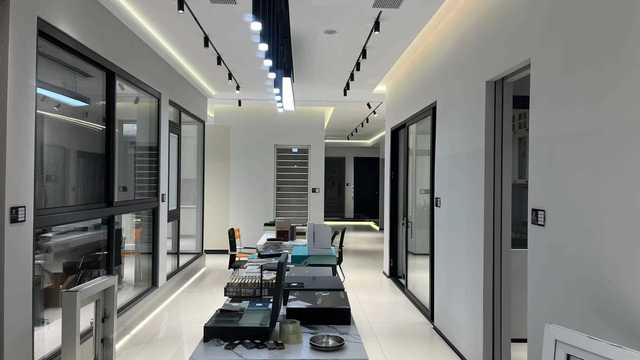
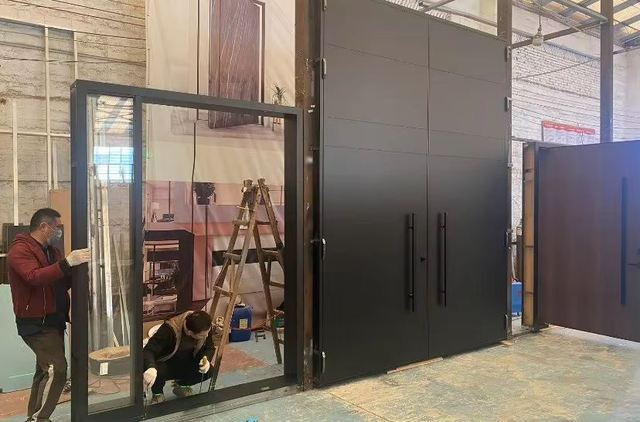
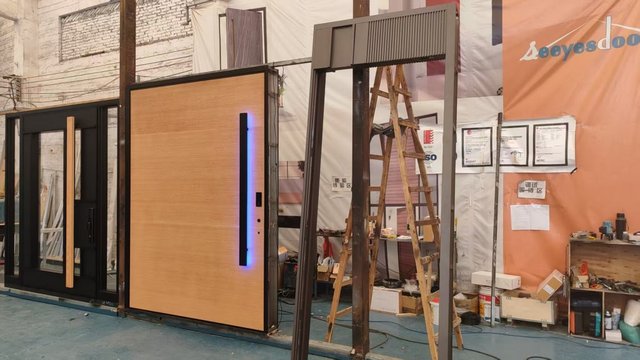
Dongguan Gerald Doors Co., Ltd. is a leading China garage door manufacturer specializing in residential, commercial, and industrial door solutions for customers worldwide. With a strong focus on quality, innovation, and reliability, Gerald Doors provides a comprehensive range of entrance and access systems designed to meet the needs of modern buildings, warehouses, logistics centers, factories, and residential properties.
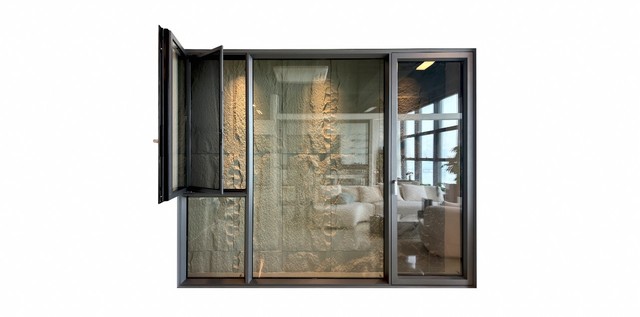
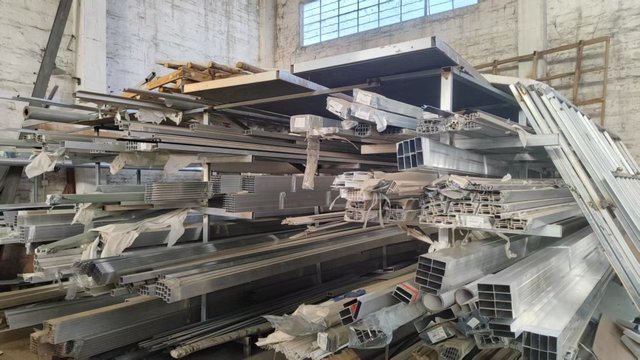
Our product portfolio includes residential garage doors, commercial garage doors, industrial overhead doors, sectional doors, roller shutter doors, high-speed doors, fire-rated doors, security doors, and customized access solutions. Engineered with premium materials and advanced manufacturing technologies, our products are designed to deliver superior durability, safety, energy efficiency, and long-term performance in diverse operating environments.
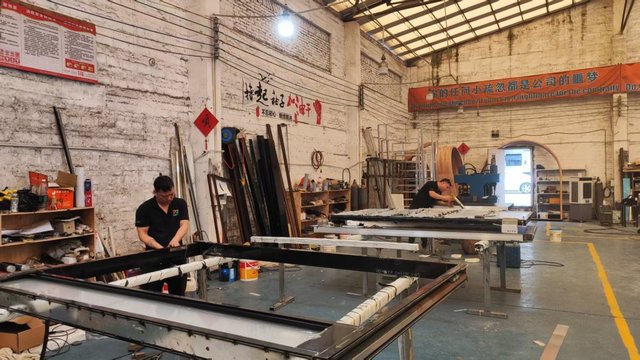
At Gerald Doors, we understand that every project has unique requirements. Our experienced engineering and production teams work closely with customers to develop tailored solutions that match specific dimensions, operational needs, architectural styles, and performance standards. From design and manufacturing to quality control and delivery, we maintain strict production processes to ensure consistent product excellence.
Serving clients across North America, Europe, the Middle East, Southeast Asia, and other global markets, Gerald Doors has built a reputation for dependable products, responsive customer service, and competitive manufacturing capabilities. We continuously invest in research and development to improve product functionality, automation technologies, and smart access solutions that support the evolving demands of residential and industrial applications.
How modern supply chain managers mitigate risks through technical compliance, structured lead times, and engineering-first partnerships.
Procurement teams look past the initial purchase price to consider shipping, duty structures, lifecycle parts (torsion spring upgrades), and installation steps to maximize return on investment.
Importing into the EEA requires full CE marking compliance. Lack of certified safety features on heavy doors risks customs clearance issues and commercial liability.
Industrial doorways vary globally. Custom headroom tracking, vertical configurations, high-lift operations, and built-in pass doors are key factors that prevent off-the-shelf purchasing errors.
From extreme cold-chain operations in northern latitudes to high-wind coastal hubs in tropical regions, access configuration demands precision tailoring.
For cold storage, minimizing refrigeration loss is key. Pairing our thermal-break insulated sectional doors with high-speed PVC barrier systems keeps interior spaces dry, prevents frost buildup, and stabilizes temperatures.
Coastal facilities require wind resistance. By utilizing reinforced double-skin steel panels, heavy-duty side hinges, and thick structural wind trusses, our configurations reliably withstand Class 4 wind forces.
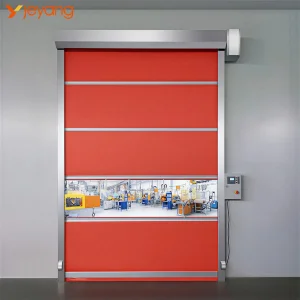
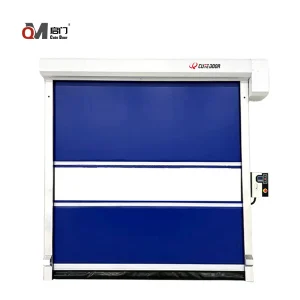
Cleanroom environments depend on air-leakage control. We implement high-speed, high-density PVC roll-up doors with tight-sealing tracks to preserve pressure differentials and reduce microbial ingress.
Direct answers to the most critical mechanical and safety questions regarding modern commercial door deployments.
Under European Standard EN 13241-1, CE certification guarantees compliance with safety protocols for mechanical strength, wind load resistance, thermal performance, and user protection. Key provisions include anti-drop devices that stop the door leaf if a cable or torsion spring breaks, mechanical finger-protection profiles to prevent trapping, and safety edge systems that automatically reverse movement upon contact with an obstacle.
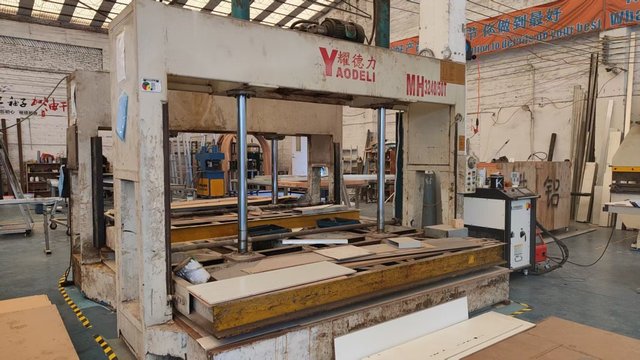
Our facilities utilize continuous, automated polyurethane foaming lines alongside precision laser welding systems to ensure uniform panel density (42-45 kg/m³) and exact dimensions. We conduct rigorous stress, wind load, and lifecycle tests on every hardware batch, confirming compliance with internal and CE standards before export.
Yes, we design and integrate pedestrian doors with low-profile thresholds to maintain structural integrity. The frame is reinforced with heavy-duty structural steel profiles, and we seal all perimeters with specialized gaskets to minimize thermal loss and ensure compliant emergency exit access.
Standard OEM production ranges from 20 to 30 days depending on the customization scope. To maximize shipping container efficiency, we stack door panels horizontally in sturdy protective crates, while hardware components and tracks are bundled securely. This approach prevents in-transit shifting and lowers shipping costs per unit.
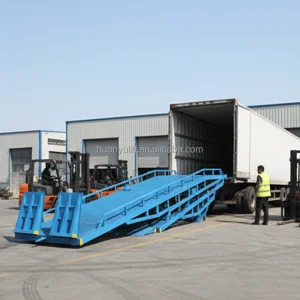
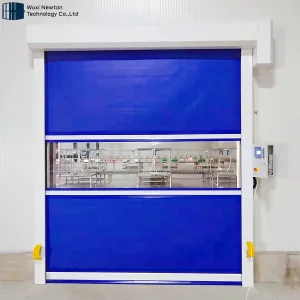
Explore our secondary line of high-performance components, loading dock hardware, and specialized roll-up barriers.
 Gerald Doors