Engineered for high-frequency operations, logistics efficiency, and weather insulation across Malaysian industrial hubs.
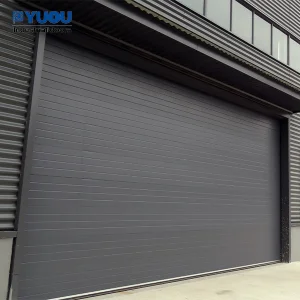
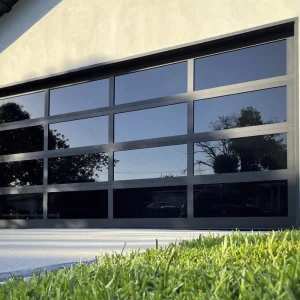
The aerospace industry and mega-logistics sectors in Southeast Asia, particularly within the Malaysian market, are undergoing unprecedented expansion. Initiatives like the Malaysia Aerospace Industry Blueprint 2030 have accelerated the expansion of maintenance, repair, and overhaul (MRO) facilities, manufacturing clusters, and smart cargo terminals around major hubs like Kuala Lumpur International Airport (KLIA), Sultan Abdul Aziz Shah Airport (Subang Airport), and the Senai Aerospace Park in Johor. To support these massive infrastructures, the demand for highly engineered structural solutions, specifically aircraft hangar door systems, has skyrocketed.
“Operational efficiency in aerospace MRO facilities begins at the building envelope. Hangar doors must not only accommodate massive clearance envelopes but also stand resilient against extreme tropical microclimates.”
Unlike temperate zones, manufacturers supplying industrial doors to Malaysia must address intense tropical microclimates marked by three core factors:
Our structural systems are developed to exceed global safety and durability parameters.
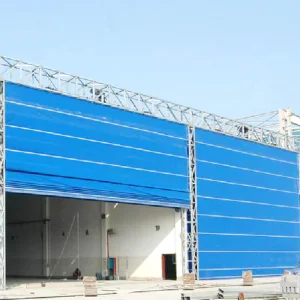
Heavy-duty, windproof configurations customized for expansive industrial structural envelopes.
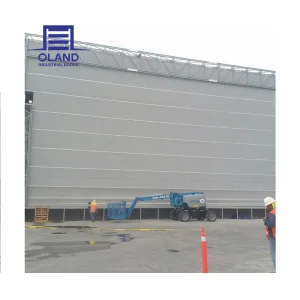
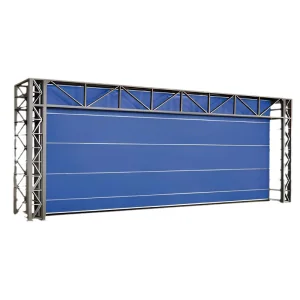
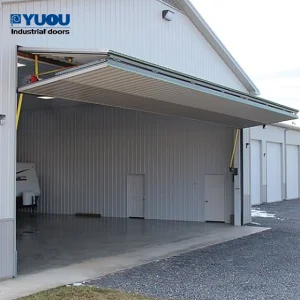
Selecting the ideal hangar door architecture dictates the structural engineering profile of the entire facility envelope. The two leading design formats used throughout Malaysian airbases and logistic parks are compared below:
| Technical Parameter | Vertical Lifting Fabric Megadoors | Horizontal Sliding Steel Hangar Doors |
|---|---|---|
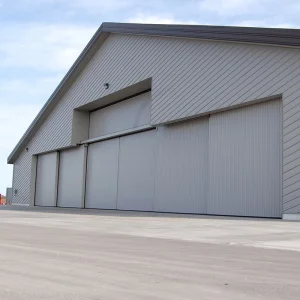
| Footprint Requirement | Minimal; folds upward vertically. Eliminates side track extensions. | Requires lateral run-out pockets or space inside hangar structural bays. |
| Wind-Load Capacity | Excellent. Wind loads transferred directly via horizontal steel wind-locks. | High. Structural steel trusses manage severe pressure deflection. |
| Maintenance Frequency | Low. Fewer moving mechanical gears. No bottom floor tracks to clear. | Moderate. Bottom tracks must be kept free of dirt, grit, and water ponding. |
| Primary Application | MRO, aerospace facilities, extreme size opening zones. | Commercial logistics, military aircraft bunkers, standard shipyards. |
In modern industrial design, a hangar door is no longer just a physical barrier; it is an active mechanical element of facility logistics. IoT sensors monitor real-time operating metrics, alerting facilities directors to preventive maintenance windows. Integrated PLC safety units automatically halt operations if the optical beams detect unexpected structural obstacles, shielding multi-million dollar aircraft payloads from accidental structural contact.
Furthermore, structural optimization software permits manufacturers to engineer doors that achieve high structural integrity while significantly minimizing structural dead loads, translating directly to lighter, more cost-effective steel framing designs for building developers.
Your Trusted Global Partner for Innovative, Secure, and High-Performance Door Systems
Dongguan Gerald Doors Co., Ltd. is a leading China garage door manufacturer specializing in residential, commercial, and industrial door solutions for customers worldwide. With a strong focus on quality, innovation, and reliability, Gerald Doors provides a comprehensive range of entrance and access systems designed to meet the needs of modern buildings, warehouses, logistics centers, factories, and residential properties.
Our product portfolio includes residential garage doors, commercial garage doors, industrial overhead doors, sectional doors, roller shutter doors, high-speed doors, fire-rated doors, security doors, and customized access solutions. Engineered with premium materials and advanced manufacturing technologies, our products are designed to deliver superior durability, safety, energy efficiency, and long-term performance in diverse operating environments.
At Gerald Doors, we understand that every project has unique requirements. Our experienced engineering and production teams work closely with customers to develop tailored solutions that match specific dimensions, operational needs, architectural styles, and performance standards. From design and manufacturing to quality control and delivery, we maintain strict production processes to ensure consistent product excellence.
Serving clients across North America, Europe, the Middle East, Southeast Asia, and other global markets, Gerald Doors has built a reputation for dependable products, responsive customer service, and competitive manufacturing capabilities. We continuously invest in research and development to improve product functionality, automation technologies, and smart access solutions that support the evolving demands of residential and industrial applications.
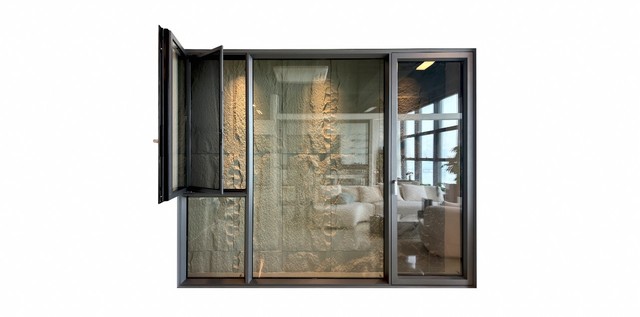
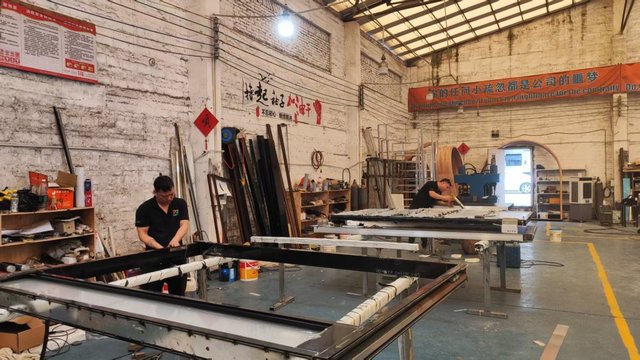
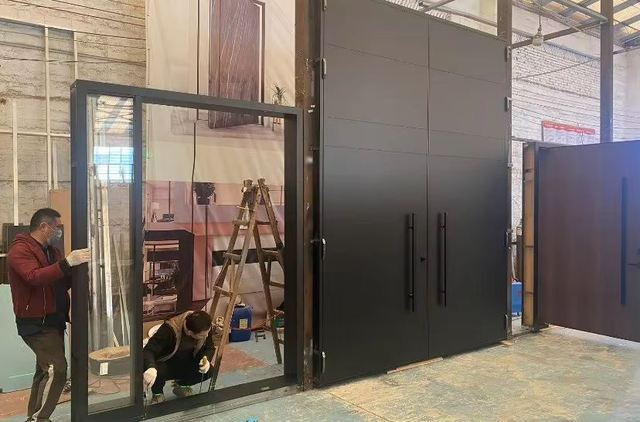
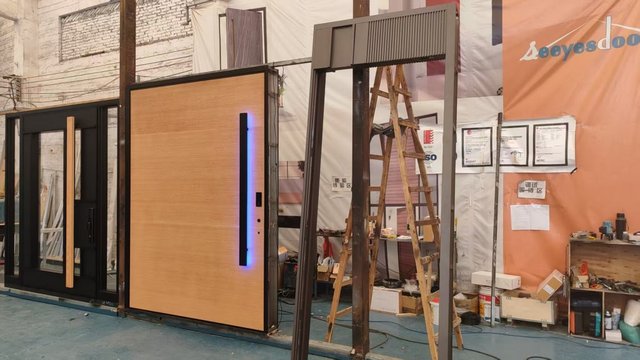
We implement rigorous ISO 9001:2015 production protocols. Below is a look inside our manufacturing processes, showcasing precision fabrication, structural assembly, and packaging standards.
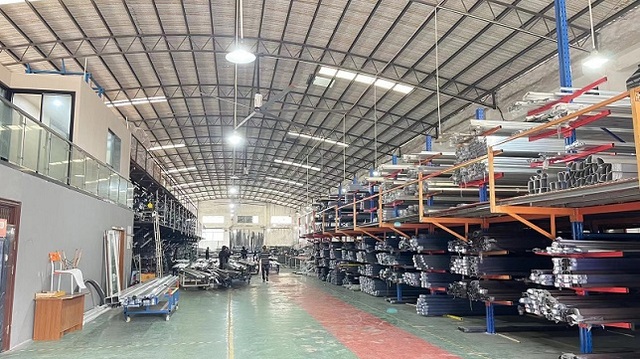
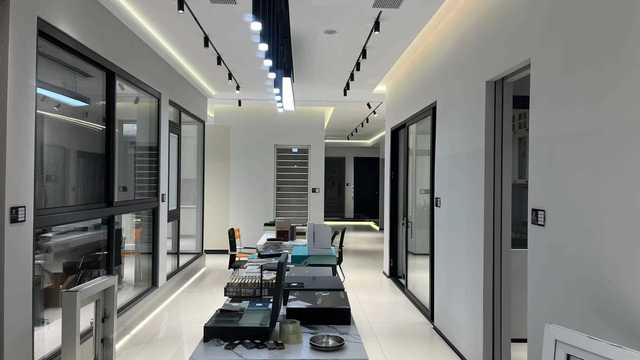
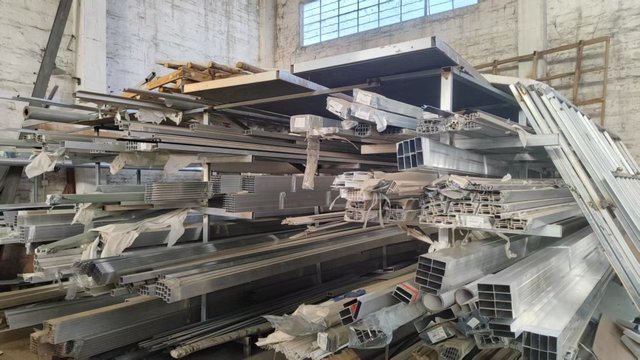
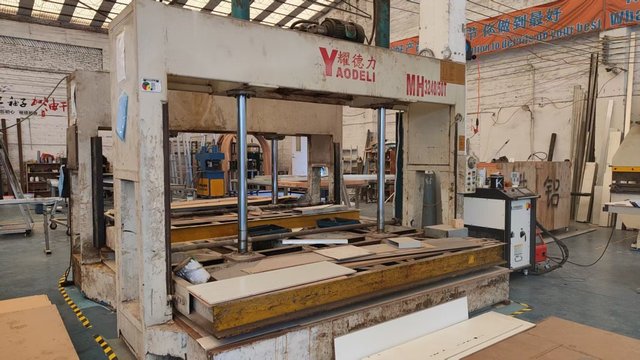
Engineered for high reliability, long lifespan, and strict safety guidelines.
Utilizes dynamic vertical wind profiles and structural calculations that safely absorb heavy cyclonic gusts without deforming structural integrity.
Standard integration of triple optical safety barriers, warning buzzers, high-strength windlocks, and fail-safe mechanical brake drops.
Galvanized structural frames matched with marine-grade coatings and salt-resistant hardware components, tailored for coastal logistics.
Explore our complete range of specialized sliding, folding, and hydraulic mega hangar solutions designed for major global operations.
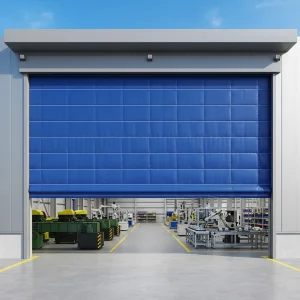
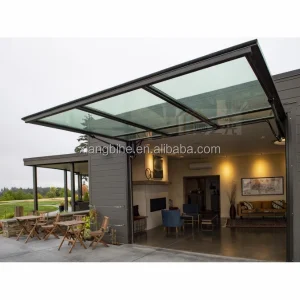
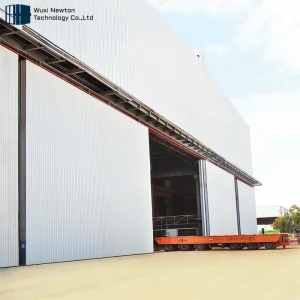
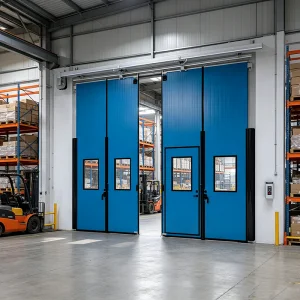
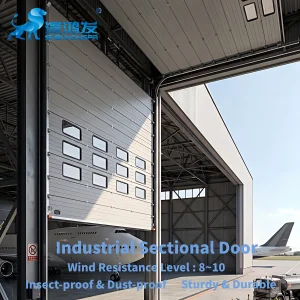
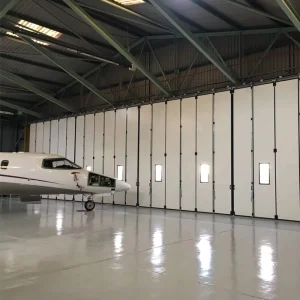
Industrial doors manufactured for Malaysian operations are customized based on the commercial goals of distinct localized industrial frameworks:
Procuring large industrial doors from a premium manufacturer in China to be installed on-site in Malaysia requires structured planning. Dongguan Gerald Doors Co., Ltd. streamlines the supply chain by coordinating structural design validation directly with Malaysian project engineers, followed by secure packaging and ocean shipping through Port Klang or Johor Port. We support local contractors with step-by-step structural installation manuals, electrical interface diagrams, and customized commissioning protocols to ensure smooth execution of all projects.
Explore technical guidance regarding industrial hangar door procurement, engineering, and logistics in Malaysia.
Yes. All of our industrial door systems are engineered according to international standards (EN 12424) and can be calculated to meet the specific wind zones of Malaysia under MS EN 1991-1-4. We supply complete structural engineering calculations during the design submittal stage.
We mitigate corrosion using hot-dip galvanized steel subframes, premium polyester dual-skin PVC fabrics with UV inhibitors, and specialized marine-grade powder coatings. Moving components like hinges and cable drums are treated with high-grade anti-corrosive plating to handle continuous exposure to tropical humidity.
Fabrication lead times range from 4 to 8 weeks depending on the complexity and dimensions of the door system. Ocean transport from our Southern China manufacturing base (Dongguan) to Port Klang or Johor Port takes approximately 7 to 10 days, followed by customs clearance and inland delivery.
Yes, our controls use standard PLC microprocessors that easily interface with facility fire alarms, radar loops, card readers, and hangar operations management platforms. Standard safety mechanisms, such as safety edges, fall arrest devices, and manual overrides, are built into every unit.
We supply detailed CAD drawings, structural load plans, wiring schematics, and video tutorials. For major aerospace and shipyard projects, we can provide virtual engineering supervision or coordinate with local Malaysian mechanical installers to ensure high-quality on-site execution.
 Gerald Doors