CE and UL certified doors engineered for structural integrity, fire containment, and automated facility access control.
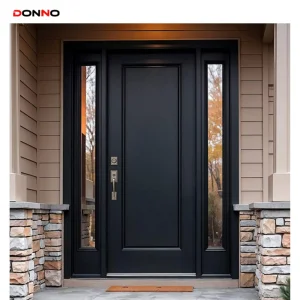
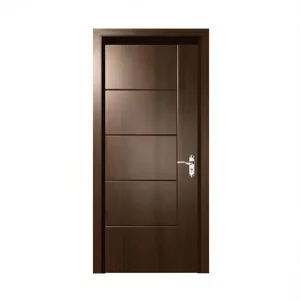
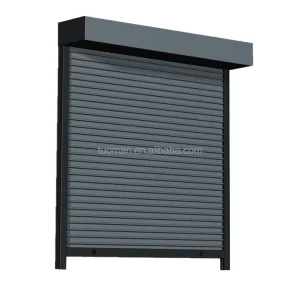
Analyzing structural resilience, energy performance (U-Values), and architectural integration.
Modern architecture demands a delicate equilibrium between transparency, structural integrity, and thermal efficiency. The transition of glass door solutions from simple aesthetic installations to highly engineered, active building components marks a major breakthrough in architectural technology. Over the past decade, high-performance structural glazed entries have integrated advanced safety treatments, thermal breaks, and automated operations. As global code organizations implement stricter regulations on energy conservation, structural resilience, and fire protection, specifying the appropriate access technology becomes a critical phase in project development.
Today's premium glass doors leverage multiple glass technologies to meet performance criteria. Toughened safety glass conforming to EN 12150-1 offers exceptional mechanical strength, reducing the risk of thermal fracturing and providing impact protection up to five times greater than standard float glass. In applications requiring enhanced security or acoustic isolation, laminated glass compliant with EN 14449 is deployed. This utilizes a high-toughness polyvinyl butyral (PVB) or ionomer interlayer (such as SentryGlas) to ensure post-breakage structural capacity, retaining glass fragments safely to prevent injury and secure the building envelope against forced entry.
From an energy perspective, glass assemblies are no longer considered thermal weak points in the building facade. By introducing argon-filled double or triple glazing, low-emissivity (Low-E) coatings, and warm-edge spacer bars, manufacturers can achieve overall thermal transmittance values (U-values) below 1.2 W/m²K. These thermal performance characteristics are central to achieving modern building certifications such as LEED, BREEAM, and DGNB, positioning energy-efficient glass door systems as key drivers in reducing operational carbon footprints worldwide.
Utilizing multi-layered laminated safety glass with tough PVB or SGP interlayers, designed to meet rigorous anti-burglary and impact standards.
Integration of low-power brushless DC motors, telescopic operators, and vehicle detection radar systems that minimize open times and conserve interior climate conditions.
Combining direct Chinese factory pricing with robust CE compliance allows project managers to achieve superior design specifications within budget.
An engineering-level overview of structural door solutions and their corresponding global standards.
| Door Technology / Type | Standard Compliance | Safety Glass Spec | Thermal Performance (U-Value) | Acoustic Mitigation (Rw) |
|---|---|---|---|---|
| Commercial Frameless Glass Entry | EN 14351-1, CE Certified | 12mm Toughened (EN 12150-1) | N/A (Single Glazing) | Up to 32 dB |
| Telescopic Automatic Sliding Entry | EN 16005, DIN 18650 | 8mm + PVB + 8mm Laminated | 1.6 W/m²K (with Double IGU) | Up to 38 dB |
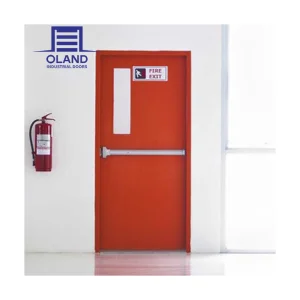
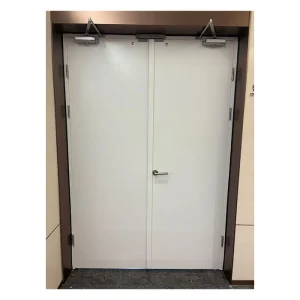
| Fire-Rated Glass Assemblies | BS EN 1634-1, UL 10C | Intumescent Multi-layered Fire Glass | 1.4 W/m²K | Up to 42 dB |
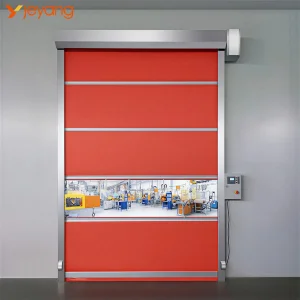
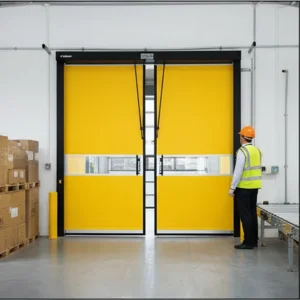
| Industrial High-Speed Roller / Sectional | EN 13241-1 | Insulated Double Acrylic / PVC panel | 1.8 - 2.2 W/m²K | Up to 28 dB |
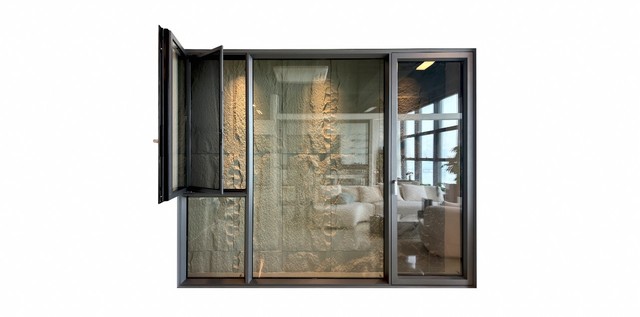
| Facial Recognition Aluminum Entry | EN 60950, CE Mark | 10mm Tempered + Argon + Low-E | 1.3 W/m²K | Up to 35 dB |
*Note: Thermal performance and acoustic attenuation values depend heavily on profile designs, perimeter seal configurations, and structural glazing thickness. For exact specifications on custom design dimensions, consult our engineering desk at Dongguan Gerald Doors Co., Ltd.
Exploring advanced vehicle detection systems, biometric security, and predictive maintenance protocols.
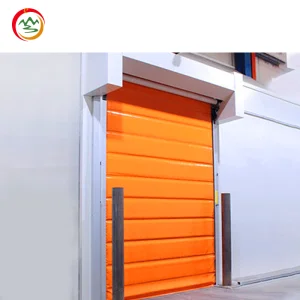
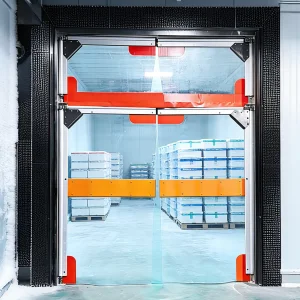
As smart city infrastructure expands, industrial and commercial doors are transitioning from passive physical barriers to dynamic, intelligent endpoints. Utilizing deep-learning algorithms, smart vehicle detection systems can differentiate between human pedestrian traffic and heavy-duty machinery (such as forklifts or automated guided vehicles). This targeted identification significantly optimizes operational logistics in high-frequency cold storage and warehouse environments, minimizing cycle open times by up to 45%, and directly reducing energy loss from heating or cooling systems.
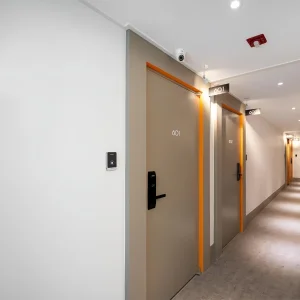
In high-security environments, smart biometric integrations, such as 3D facial recognition algorithms and encrypted NFC smart lock modules, communicate directly with cloud-based access control platforms. These systems record pedestrian logs, detect unauthorized access in real time, and monitor structural component degradation through embedded IoT stress sensors. By logging vibration, velocity variations, and hinge mechanical resistance, system controllers can perform predictive maintenance, scheduling repairs before components fail. This reduces operational downtime and extends the service life of high-performance glass entries.
Manufacturing Excellence, Global Compliance, and Premium Structural Integrity.
Dongguan Gerald Doors Co., Ltd. is a leading China garage door manufacturer specializing in residential, commercial, and industrial door solutions for customers worldwide. With a strong focus on quality, innovation, and reliability, Gerald Doors provides a comprehensive range of entrance and access systems designed to meet the needs of modern buildings, warehouses, logistics centers, factories, and residential properties.
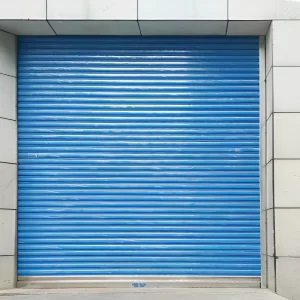
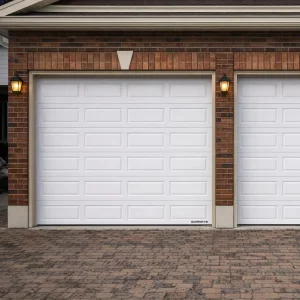
Our product portfolio includes residential garage doors, commercial garage doors, industrial overhead doors, sectional doors, roller shutter doors, high-speed doors, fire-rated doors, security doors, and customized access solutions. Engineered with premium materials and advanced manufacturing technologies, our products are designed to deliver superior durability, safety, energy efficiency, and long-term performance in diverse operating environments.
At Gerald Doors, we understand that every project has unique requirements. Our experienced engineering and production teams work closely with customers to develop tailored solutions that match specific dimensions, operational needs, architectural styles, and performance standards. From design and manufacturing to quality control and delivery, we maintain strict production processes to ensure consistent product excellence.
Serving clients across North America, Europe, the Middle East, Southeast Asia, and other global markets, Gerald Doors has built a reputation for dependable products, responsive customer service, and competitive manufacturing capabilities. We continuously invest in research and development to improve product functionality, automation technologies, and smart access solutions that support the evolving demands of residential and industrial applications.
Driven by a commitment to quality and customer satisfaction, Dongguan Gerald Doors Co., Ltd. strives to be a trusted global partner for innovative, secure, and high-performance door systems.
Addressing technical questions, testing standards, and compliance queries from structural engineers and procurement heads.
To export glass door solutions to the European Economic Area (EEA), products must carry the CE Mark, certifying compliance with EN 14351-1 (for external pedestrian doorsets) or EN 16005 (for power-operated pedestrian doorsets). Structural safety glass elements must also comply with EN 12150-1 (for thermally toughened safety glass) and EN 14449 (for laminated safety glass).
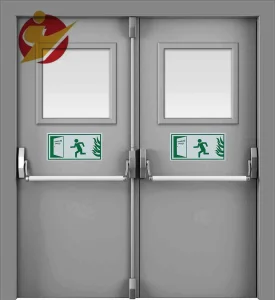
Fire ratings are determined via rigorous furnace testing conducted according to BS EN 1634-1 or UL 10C standards. Doors are graded as integrity-only (E class) or insulation-rated (EI class). The latter utilizes complex intumescent gel interlayers that turn opaque under extreme heat, blocking radiative heat transfer for durations ranging from 30 minutes (EI30) up to 120 minutes (EI120) to secure escape routes.
Yes. Class ratings for wind load resistance conform to EN 12210 (ranging from Class 1 to Class 5/Exceed). We custom-engineer structural aluminum profiles, double-glazing configurations, and reinforcement hardware to match specific wind-load calculations for high-velocity hurricane zones (HVHZ) or high-rise exposure profiles.
We pack all heavy-duty glass doors and glazed assemblies using heavy, custom-built, closed plywood crates with internal foam cushioning, shock-absorption layers, and anti-humidity desiccants. The crates are designed to fit securely inside containers, supported by metal braces and load-rated strapping to prevent load shifting during sea transit.
Yes, our automated telescopic, sliding, and high-speed door controllers are equipped with standard Modbus, BACnet, or dry-contact interfaces. This allows seamless integration into central BMS systems for real-time monitoring, remote lock control, emergency override triggers (linked to fire alarm systems), and automated HVAC system interlocks.
Engineered for cold storage, retail security, high-frequency logistics hubs, and fire safety compliance.
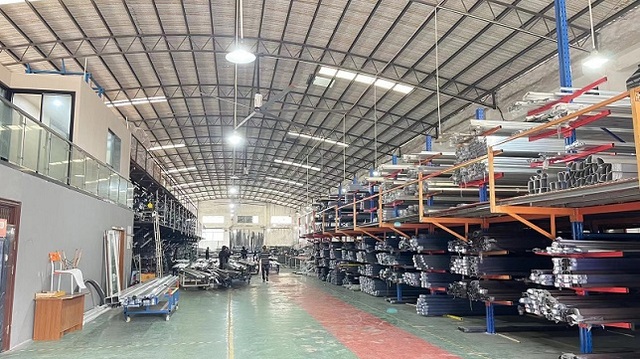
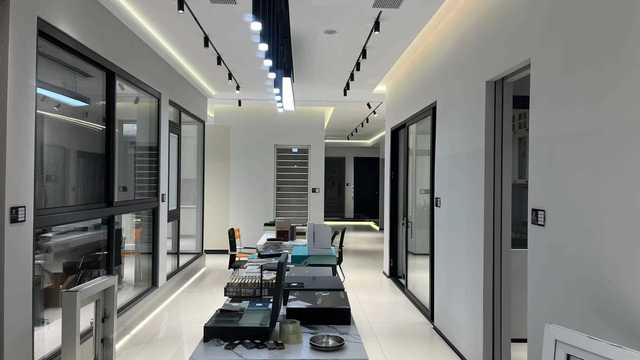
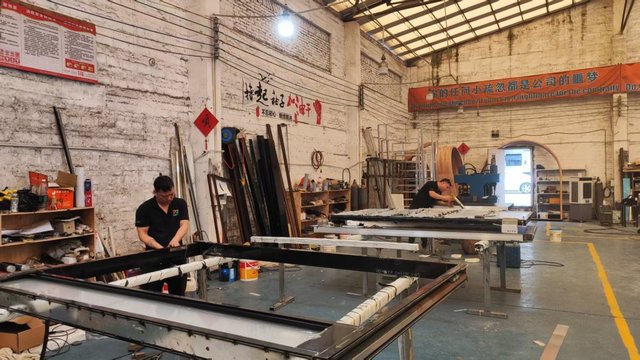
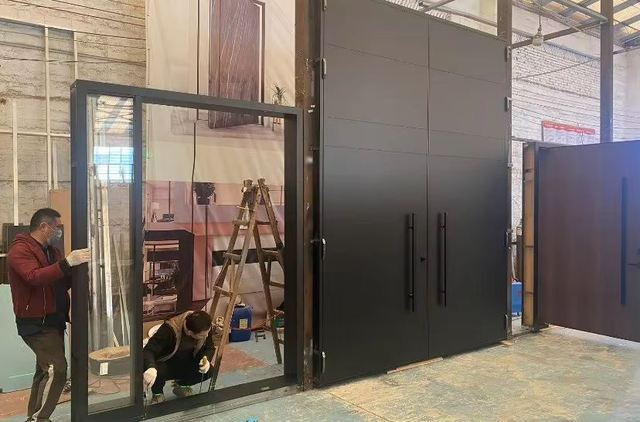
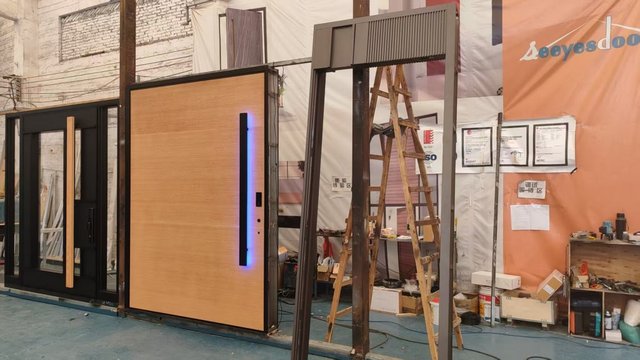
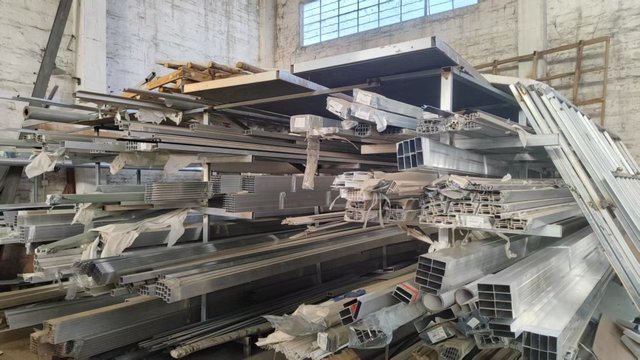
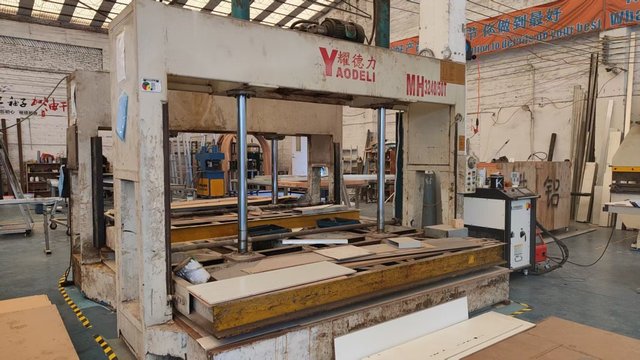
Inside Dongguan Gerald Doors Co., Ltd.: Utilizing precision machinery, quality control checkpoints, and heavy-duty fabrication bays.
 Gerald Doors