Choosing a high speed door supplier for a logistics center is not a simple price comparison. It affects loading speed, temperature control, worker safety, and daily maintenance. In busy warehouses, doors may open hundreds of times each day. A delay of several seconds can create vehicle queues, cold-air loss, or unnecessary labor pressure.
This guide examines China’s top 10 high speed door suppliers for logistics centers. It focuses on practical capabilities, including door cycle speed, curtain materials, sealing performance, safety sensors, control systems, installation support, and spare-parts availability. The key question is clear: why are high speed doors used in logistics centers? They help separate indoor and outdoor zones quickly, reduce air exchange, and support smoother movement between docks, storage areas, and production spaces. Temperature-sensitive facilities may also benefit from better environmental stability.
The selection process considers manufacturer experience, engineering knowledge, production quality, customer service, and evidence of reliable project delivery. Factory inspection, technical documentation, testing records, and user feedback matter more than polished brochures. Still, no supplier is perfect. Some companies may offer strong customization but weaker overseas support. Others may provide attractive prices but limited maintenance networks. That difference can become serious after installation.
Real warehouse conditions should guide the decision. Consider dust, wind, forklifts, humidity, traffic frequency, and available ceiling space. Request clear specifications and written warranty terms. A short visit to an operating facility can reveal more than a long sales presentation. This overview aims to provide a balanced starting point for logistics managers, contractors, and buyers seeking dependable high speed door solutions from China.
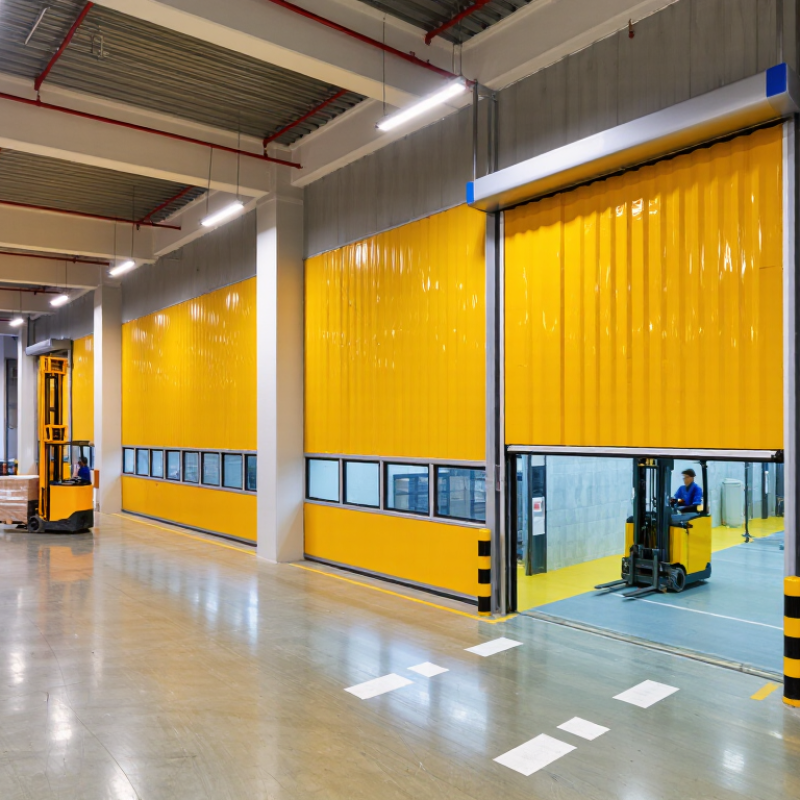
High-speed doors commonly open between 0.8 and 2.5 m/s in logistics facilities. This range reduces airflow, dust movement, and forklift waiting time. However, EN 13241 does not prescribe one universal opening speed. It defines performance and safety requirements for industrial, commercial, and garage doors. Suppliers should provide conformity evidence, safety testing, and measured cycle data.
MHI’s 2024 Annual Industry Report found that 55% of supply-chain professionals planned to adopt robotics and automation within five years. Faster doors support this shift, especially near automated storage zones. Yet speed alone is not enough. A door opening at 2.5 m/s may suffer from higher impact energy, curtain wear, or poor performance in strong wind. Real warehouse experience shows that balanced acceleration, photoelectric sensors, and reliable closing control matter just as much. I may be too focused on speed here; maintenance access can influence productivity more than a small speed increase.
Tips: Request opening and closing speeds under actual door dimensions. Check testing records against EN 13241. Ask about safety edges, emergency release, wind resistance, and rated cycles. Compare downtime data, not only catalogue figures. A practical trial during peak forklift traffic can reveal problems quickly. Even a few delayed cycles become noticeable each hour.
Sources: EN 13241:2003+A2:2016; MHI, 2024 Annual Industry Report.
China Top 10 High Speed Door Suppliers for Logistics Centers
Ranking Criteria: Safety, Uptime, Airflow and ISO 13849-1 Compliance
Choosing high speed door suppliers for a logistics center requires more than comparing opening speeds. The strongest candidates show how their doors perform beside forklifts, loading bays, and temperature-controlled zones. Safety comes first. Review edge sensors, light curtains, emergency stops, bottom-edge detection, and controlled restart functions.
ISO 13849-1 evidence deserves close attention. Suppliers should provide risk assessments, safety-function diagrams, calculated Performance Levels, and validation records. A product brochure is not enough. Buyers should confirm whether the complete door system reaches the required PLr for each hazard. This distinction is often missed.
Uptime must be measured in practical terms. Ask for cycle-test data, motor duty ratings, spare-parts availability, and response times for service calls. A door opening thousands of times daily cannot depend on a difficult repair process. Airflow also matters. Measure leakage around the curtain, pressure differences, and recovery time after each opening.
Small details count.
A useful ranking should include installation quality and operator training, not only factory specifications. Site audits frequently expose uneven floors, poor sensor alignment, or neglected maintenance. These issues can reduce performance, even when the equipment is well designed. No ranking is perfectly objective. Seasonal weather, traffic density, and building layout can change the results. Suppliers willing to share test limits, failure data, and corrective actions deserve closer technical review.
China’s leading ten suppliers typically produce high-speed roll-up, spiral, folding, and cold-storage doors. Their systems serve loading bays, clean areas, warehouses, and temperature-controlled rooms. Common specifications include PVC curtains, insulated panels, radar sensors, safety photocells, and stainless-steel frames. A well-designed door can open within seconds, reducing heat loss and forklift waiting time. Small details matter, especially curtain replacement and control-box access.
Certification evidence separates serious manufacturers from trading companies. Many suppliers operate under ISO 9001 quality systems and may hold ISO 14001 environmental certification. Products for European projects often require CE conformity and EN 13241 performance documentation. Fire-rated or hygienic models need additional test reports for their intended application. Buyers should request current certificates, factory addresses, test scope, and matching model numbers. A certificate alone proves little.
Manufacturing capacity varies widely across the ten suppliers. Larger factories may use automated cutting, welding, powder coating, and curtain assembly lines. They may also maintain testing rooms for wind resistance, cycle endurance, sealing, and emergency release. Monthly output can range from several dozen custom doors to hundreds of standard units. Yet capacity figures are not always comparable. Some include outsourced components or unfinished assemblies. Factory audits, sample inspections, and installation records reveal more than impressive brochures. In practice, even a capable supplier may struggle with unusual dimensions, weak site measurements, or delayed spare parts.
China’s top ten high-speed door suppliers should be compared by application, not catalog size. Fabric roll-up doors suit busy forklift lanes and pedestrian zones. Rigid spiral doors offer better insulation and repeated cycles. Insulated doors fit chilled rooms, while dock doors need stronger seals and impact resistance. Clear openings must match traffic, not only wall dimensions. A 3.5-meter opening may suit pallet trucks, but taller automated equipment needs more headroom. The World Bank’s 2023 Logistics Performance Index assessed 139 economies and emphasized infrastructure and shipment timeliness. Door speed, uptime, and service access directly support both factors.
Grand View Research reported continued growth in the industrial high-speed door market, driven by warehouses, manufacturing, and cold-chain facilities. Yet supplier comparisons can mislead when opening speed is shown without recovery time. Ask for tested cycles, wind-load data, safety-edge performance, and spare-parts availability. A door opening in two seconds is useful only when it closes reliably after every vehicle. This is where field experience matters. Specifications look precise; real sites are less tidy.
Tips: Measure clear width, clear height, traffic frequency, temperature, and nearby equipment. Request performance data at the actual opening size. Check whether maintenance teams can replace curtains, guides, and sensors without long shutdowns. Do not select the fastest model automatically. A slightly slower insulated door may reduce energy loss and traffic disruption. Supplier rankings are helpful, but the best choice still depends on site conditions, and that judgment deserves review.
| Rank | Anonymous Supplier Profile | Typical High-Speed Door Types | Typical Clear Opening Width | Typical Clear Opening Height | Typical Operating Speed | Temperature / Environment Suitability | Recommended Logistics Applications | Common Configuration Options | Overall Logistics-Center Fit |
|---|---|---|---|---|---|---|---|---|---|
| 1 | Supplier Profile 01 | High-speed fabric roll-up Insulated roll-up | 2,000–6,000 mm | 2,000–5,000 mm | 0.8–2.0 m/s opening | Indoor, clean production areas, temperature-controlled zones | Warehouse aisles, picking areas, conveyor transfer points, dock-to-warehouse separation | Vision windows, breakaway bottom bar, radar, induction loop, safety photocells | Excellent |
| 2 | Supplier Profile 02 | Rigid-panel high-speed Insulated sectional | 2,500–7,000 mm | 2,500–6,000 mm | 0.5–1.5 m/s opening | External façades, windy locations, moderate thermal-control requirements | Loading bays, dispatch halls, vehicle entrances, high-cycle external openings | Wind-resistant panels, insulated sections, dock seals, traffic lights, safety edges | Excellent |
| 3 | Supplier Profile 03 | PVC swing door High-speed roll-up | 1,200–4,500 mm | 2,000–4,500 mm | 0.8–1.8 m/s opening | Food logistics, pharmaceutical support areas, wash-down zones | Cold-chain corridors, hygienic transfer rooms, packaging and sorting rooms | Food-grade curtains, stainless-steel covers, heated frames, interlocking controls | Excellent |
| 4 | Supplier Profile 04 | Spiral high-speed door Rigid high-speed door | 2,500–5,500 mm | 2,500–5,500 mm | 1.0–2.5 m/s opening | High-traffic external openings and areas requiring improved insulation | Distribution-center vehicle access, cross-dock lanes, automated loading zones | Insulated vision panels, wind-load reinforcement, smart access control, loop detectors | Very Good |
| 5 | Supplier Profile 05 | Cold-storage sliding door High-speed freezer door | 1,500–4,000 mm | 2,000–4,500 mm | 0.5–2.0 m/s opening | Chilled and frozen rooms, typically down to approximately −30°C with suitable options | Cold-chain warehouses, freezer ante-rooms, chilled dispatch and receiving areas | Heated door frame, heated vision panel, low-temperature seals, emergency release | Very Good |
| 6 | Supplier Profile 06 | Self-repairing fabric door Impact-resistant roll-up | 1,500–5,000 mm | 2,000–5,000 mm | 0.7–1.8 m/s opening | High-impact traffic, dusty environments, frequent forklift movement | Forklift routes, pallet staging areas, internal warehouse partitions | Flexible curtain, self-resetting guides, forklift detection, wireless controls | Very Good |
| 7 | Supplier Profile 07 | Fire-rated rolling door High-speed fire curtain | 1,500–6,000 mm | 2,000–6,000 mm | Normal operating speed varies by design | Fire-compartment boundaries and smoke-control locations; rating must be project-certified | Fire separation lines, automated storage areas, battery charging rooms, service corridors | Fire alarm interface, smoke detector signal, gravity closing, emergency power, status monitoring | Specialist |
| 8 | Supplier Profile 08 | Cleanroom high-speed door Hermetic roll-up door | 1,000–4,000 mm | 2,000–4,000 mm | 0.5–1.5 m/s opening | Low-dust rooms, controlled-temperature areas, hygienic logistics environments | Pharmaceutical logistics, medical-supply storage, inspection and packaging zones | Flush surfaces, stainless steel, sealed guides, interlock logic, pressure monitoring | Good |
| 9 | Supplier Profile 09 | Large-span fabric door Industrial high-speed door | 4,000–10,000 mm | 4,000–8,000 mm | 0.5–1.2 m/s opening | Large vehicle halls, aircraft-type spaces, bulky-goods distribution areas | Oversized loading halls, container handling, heavy-goods logistics, cross-dock entrances | Reinforced curtain, wind bars, large-area radar, emergency exit, high-cycle motor | Good |
| 10 | Supplier Profile 10 | High-speed folding door Traffic-control door | 2,000–5,000 mm | 2,000–5,000 mm | 0.5–1.0 m/s opening | Internal logistics areas and locations with limited headroom | Warehouse zoning, parcel sorting rooms, pedestrian-forklift separation, service openings | Low-headroom tracks, transparent panels, access readers, radar, safety light curtain | Good |
Choosing among China’s top ten high speed door suppliers requires more than comparing quotations. A logistics center should measure total cost of ownership, not only the purchase price. Include installation, electricity use, spare parts, repairs, downtime, and staff training. A cheaper door may become expensive after repeated sensor failures or delayed service visits.
Service coverage deserves practical testing. Ask for response times, local technicians, emergency contacts, and replacement-part stock. Review maintenance records from warehouses with similar traffic levels. A loading bay handling 800 cycles daily needs different support than a small distribution site. Check whether technicians can inspect curtains, guides, motors, safety edges, and control panels. Service promises sound good. Written commitments matter more.
Request documented 100,000-cycle testing under realistic conditions. The test should record opening speed, closing speed, safety reversals, wind exposure, and component replacement. Ask whether testing covers the complete door system or only the motor. That difference is important. Inspect sample reports, calibration records, and failure data before approval. In practical audits, spreadsheets often hide downtime. A live demonstration may reveal vibration, uneven travel, or slow recovery after a power interruption. No supplier is perfect. Buyers should leave room for uncertainty and require measurable acceptance criteria, staged payments, and post-installation reviews.
Common options include fabric roll-up, rigid spiral, folding, and insulated cold-storage doors. Each suits different traffic and temperature conditions. Choose by application, not catalog size.
Fabric roll-up doors work well in busy forklift lanes and pedestrian areas. They open quickly and can reduce waiting time. Curtain replacement should be simple.
Rigid spiral doors suit repeated cycles and areas needing better insulation. They may perform well near loading zones with constant movement. Their higher cost deserves careful review.
Provide clear width, clear height, traffic frequency, room temperature, and nearby equipment details. Measure the usable opening, not only the wall dimensions. Small errors matter.
Request current quality and environmental certificates, when applicable. European projects may require conformity documents and performance testing. Match every certificate to the exact model number.
No. A certificate alone proves little. Check the factory address, testing scope, sample quality, and installation records. Documents should support real production evidence.
Ask about cutting, welding, coating, assembly, and product testing processes. Confirm monthly output using finished units, not vague production claims. Some figures include outsourced parts.
Request opening and recovery times, tested cycles, wind-load results, sealing performance, and safety-edge response. A two-second opening means little if closing fails repeatedly.
Very important. Confirm access to curtains, guides, sensors, and control boxes. Ask whether local teams can replace parts without long shutdowns. Service plans may look better on paper.
Not always. A slightly slower insulated door may reduce heat loss and traffic disruption. Real sites are untidy. Review the decision after checking actual traffic and equipment.
High-speed doors are essential for logistics centers because they help maintain smooth traffic flow, reduce air exchange, and separate different operational zones. This overview explains why are high speed doors used in logistics centers, focusing on opening speeds of approximately 0.8–2.5 m/s under EN 13241, as well as safety, uptime, airflow control, and ISO 13849-1 compliance. It also introduces ten leading Chinese supplier categories without naming specific brands, highlighting their product ranges, certifications, production capabilities, and suitability for warehouses, cold storage, loading docks, and clean areas.
The comparison considers door types, clear opening dimensions, operating environments, and maintenance requirements. A practical purchasing framework is included to help buyers evaluate total cost of ownership, service coverage, spare-parts availability, installation support, and performance during 100,000-cycle testing. By balancing safety, durability, energy efficiency, and operational speed, logistics managers can select high-speed door solutions that support reliable, cost-effective facility performance.
Gerald Doors